



MF/SS-CTCL-QoL is the first specific questionnaire to measure the quality of life (QoL) of patients with mycosis fungoides (MF) and Sézary syndrome (SS). It was developed by the Cutaneous Lymphoma Foundation.
Objectives(1) Translate and cross-culturally adapt the MF/SS-CTCL-QoL to Spanish (Spain). (2) To study correlation and concordance of the MF/SS-CTCL-QoL with PROM (Patient Reported Outcome Measurements): EORTC QLQ-C30, Dermatology Life Quality Index (DLQI) and Skindex-29.
Material and methodsUsing a 10-step procedure, including expert meetings and surveys of adult patients with MF or SS, a Spanish version of the MF/SS-CTCL-QoL was developed. Subsequently, its comprehensibility, completeness and relevance were evaluated. A correlation study was performed using Spearman's rho coefficient and concordance using the intraclass correlation coefficient (ICC), between MF/SS-CTCL-QoL and the EORTC QLQ-C30, DLQI and Skindex-29 questionnaires.
ResultsTranslation was satisfactory for professionals and patients, with minimal adaptations required. Excellent correlation (0.8499) was observed between MF/SS-CTCL-QoL and Skindex-29, good (0.7394) with DLQI and poor (0.5602) with EORTC QLQ-C30. Agreement was moderate (0.699) with DLQI, significant (0.865) with Skindex-29 and low (0.568) with EORTC QLQ-C30.
ConclusionsThe Spanish version of MF/SS-CTCL-QoL represents a useful tool for the clinical management of patients with MF and SS. It is linguistically equivalent to the original, assesses the same dimensions with an adequate level of comprehensibility. There is an excellent correlation with Skindex-29, good with DLQI and poor with EORTC QLQ-C30.
Cutaneous T-cell lymphomas (CTCL) are a group of rare diseases with an incidence rate of 4.1–7.7 per 1,000,000 inhabitants per year in the United States.1,2 More than two-thirds of CTCL cases are represented by mycosis fungoides (MF) and Sézary syndrome (SS).2
Several studies have shown that factors such as age, sex, disease stage, pruritus severity, and functional status can affect the quality of life (QoL) of patients with CTCL.3–5 Indeed, patients with MF/SS present with skin lesions that may be stigmatizing. Pruritus is a very common and difficult-to-control symptom. In addition, lymphoma may spread systemically and ultimately be life-threatening.6,7
Currently, multiple disease-specific QoL questionnaires are available to assess QoL in patients with oncological conditions, such as the EORTC QLQ-C308 and the Functional Assessment of Cancer Therapy-General (FACT-G).9 Others, such as the Dermatology Life Quality Index (DLQI),10 Skindex-29,11 and the visual analogue scale for pruritus,12 are specific for evaluating QoL in patients with dermatological disorders. In addition, there are generic QoL questionnaires such as the EQ-5D-5L3,4,13 and the SF-36.14 The QoL questionnaires most frequently used in CTCL include Skindex-29, FACT-G, and EQ-5D-5L.3,4,13 These questionnaires assess several aspects of QoL, such as cutaneous symptoms, emotional well-being, physical well-being, and social interactions.
The EORTC QLQ-C3015 consists of 5 functional scales, 3 symptom scales, 1 global health status/QoL scale, and 6 single items. All scales and single items are scored on a scale from 0 to 100. A higher score on the functional scales represents a better level of functioning, and a higher score on the global QoL scale indicates better QoL. In contrast, a higher score on a symptom item represents a greater symptom burden or greater financial difficulties.
The DLQI was the first dermatology-specific QoL questionnaire; it is validated and widely used in clinical practice and clinical trials to assess the impact of symptoms and treatment on patients’ QoL. The questionnaire consists of 10 questions with 4 possible responses: “not at all”, “a little”, “a lot”, or “very much”, scored as 0, 1, 2, and 3, respectively. The response “not relevant” is scored as 0. The DLQI is calculated by summing the scores of each question, resulting in a total score ranging from 0 to 30. The higher the score, the greater the impairment in QoL. The DLQI can also be expressed as a percentage of the maximum possible score of 30.10
Skindex-29 is a questionnaire that evaluates 3 dimensions of QoL – emotional, functional, and symptomatic – as well as a global score.11,16 It consists of 29 questions, each item using a 5-point Likert-type response scale ranging from 0 (never) to 4 (all the time). The score for each dimension is obtained by transforming the sum of the responses to a linear scale from 0 (no impact on health-related QoL) to 100 (maximum impact on health-related QoL). A global score is obtained using the same transformation. Higher scores indicate worse QoL.17
In clinical practice, different patient-reported outcome measures (PROMs), or combinations of them, are often used to estimate QoL in patients with MF/SS. This strategy can be time-consuming and burdensome for patients. Ideally, PROMs should be specifically designed to capture the QoL of patients with each specific condition, in this case MF/SS.18
The MF/SS-CTCL-QoL19 is a validated English-language questionnaire specific for MF/SS, consisting of 12 items that assess QoL in these patients. Its reliability and accuracy in measuring aspects such as fatigue, concern, symptom severity, and limitations in daily life have been demonstrated.20
The main objective of this study was to increase the international applicability of this questionnaire by obtaining a translation into Spanish (Spain) and a culturally adapted and validated version for the Spanish context. A specific objective was to compare it with other PROMs frequently used in these patients.
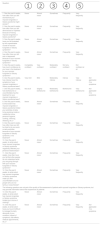
MethodsThe translation process was conducted in full compliance with the ISPOR Principles of Good Practice for the Translation and Cultural Adaptation Process for PROMs,21 using a 10-step procedure detailed in Table 1.
Ten steps for the translation and cross-cultural adaptation of the MF/SS-CTCL-QoL.
| 1. Permission was requested from the questionnaire developer to use and translate the instrument, respecting copyright, and the developer was invited to participate in the process. |
| 2. Two native Spanish speakers with prior experience in translating PROMs independently translated the original questionnaire into Spanish. |
| 3. Reconciliation of the 2 translations was performed, creating a single reconciled version and ensuring conceptual and linguistic equivalence (Supplementary Material 1). |
| 4. Three native English speakers, with no prior knowledge of the original questionnaire or any working versions, back-translated the reconciled version into English. |
| 5. The back-translation was reviewed and compared with the original English version to ensure conceptual equivalence of the translation (Supplementary data 2). |
| 6. A new translation into Spanish was performed by 2 Spanish speakers, followed by harmonization of both versions with each other and with the original version to obtain a final Spanish version and ensure conceptual equivalence between the original English version and the final Spanish version. |
| 7. Comprehension of the questionnaire was assessed in adult patients with MF (n=14) and SS (n=3) to evaluate cognitive equivalence of the translation and to test any unresolved translation alternatives. The aim was to capture patient feedback and potential difficulties in answering the questions and to incorporate the findings to improve the performance of the translation. |
| 8. The results were reviewed and discussed by the research team, and the Spanish version of the MF/SS-CTCL-QoL was obtained. |
| 9. A final review of the translation was conducted to identify and correct any typographical, grammatical, or other errors that may have been overlooked during the process. |
| 10. A final report was produced providing a detailed description of the methodology used, as well as all translation and cross-cultural adaptation decisions made throughout the process; this report may be useful for interpreting derived datasets or informing future translations of the same instrument. |
In accordance with the COSMIN (COnsensus-based Standards for the selection of health Measurement Instruments) criteria,22 feedback surveys were conducted with 17 patients. A feedback survey is a tool used to collect participants’ opinions and comments regarding a questionnaire or a specific experience. In this case, patients were given a questionnaire with 4 questions, one of which was open-ended, to be completed (Supplementary data 3) to assess comprehension. COSMIN is an initiative aimed at improving the selection of outcome measurement instruments in research and clinical practice by providing methodologies and practical tools to help select the most appropriate instrument for each specific situation. A sample size of 4–6 is considered adequate, and a sample size of ≥7 is considered very good.22
For the second endpoint, patients completed the EORTC QLQ-C30 (version 3), DLQI, and Skindex-29 questionnaires, and we studied their correlation and agreement with the MF/SS-CTCL-QoL while patients were either in the waiting room awaiting their medical appointment or in the day hospital on IV treatment.
Scoring of the EORTC QLQ-C30 was performed according to the questionnaire owners’ instructions.23 In accordance with these instructions, the MF/SS-CTCL-QoL was compared with question 30 of the EORTC QLQ-C30 (as recommended18) (“How would you rate your overall quality of life during the past week?”), as well as with the total sum of the different items for each patient.
Agreement between DLQI, Skindex-29, and EORTC QLQ-C30 questionnaires in relation to the MF/SS-CTCL-QoL was analyzed using mean differences, graphically represented using the Bland–Altman method.24 Proportions were calculated using the intraclass correlation coefficient (ICC), accompanied by its 95% confidence interval. Correlations among questionnaires were determined using Spearman's correlation coefficient. Appropriate adjustments were made so that the measurement ranges of all questionnaires were equivalent for comparison purposes.
A priori, we considered the MF/SS-CTCL-QoL questionnaire to be more similar to the Skindex-29 and DLQI (as they are specific to cutaneous problems) than to the EORTC QLQ-C30, which is a general cancer questionnaire not specific to skin disease.
A high level of correlation among the MF/SS-CTCL-QoL, Skindex-29, and DLQI questionnaires would indicate convergent validity (e.g., they measure similar constructs), whereas a low level of correlation between MF/SS-CTCL-QoL and EORTC QLQ-C30 would indicate discriminant validity. To demonstrate construct validity, it is necessary to show both convergent validity (high correlation between questionnaires measuring similar constructs) and discriminant validity (low correlation between questionnaires measuring different constructs).
All analyses were performed using Stata InterCooled for Windows, version 16 (StataCorp. 2019. Stata Statistical Software: Release 16. College Station, TX: StataCorp LLC), with a significance level of 5%.
ResultsThe Spanish version of the MF/SS-CTCL-QoL was developed and validated (Table 2). In our study, participants had a mean age of 58.3 years (range, 33–80 years). Five of the 17 participants were women (29.4%). Six patients were in stage IA, 2 in stage IB, 4 in stage IIA, 2 in stage IVA2, and 3 were in complete remission.
| Question | ||||||
|---|---|---|---|---|---|---|
| 1. Over the past 4 weeks, how often have you felt worried that your mycosis fungoides or Sézary syndrome might worsen? | Never | Almost never | Sometimes | Frequently | Very frequently | |
| 2. Over the past 4 weeks, how often have you felt demoralized or hopeless because of having mycosis fungoides or Sézary syndrome? | Never | Almost never | Sometimes | Frequently | Very frequently | |
| 3. Over the past 4 weeks, have you felt frustrated by the unpredictable course of mycosis fungoides or Sézary syndrome? | Never | Almost never | Sometimes | Frequently | Very frequently | |
| 4. Over the past 4 weeks, how often have you felt sad or depressed because of your mycosis fungoides or Sézary syndrome? | Never | Almost never | Sometimes | Frequently | Very frequently | |
| 5. Over the past 4 weeks, how much confidence do you have in the treatment for your mycosis fungoides or Sézary syndrome? | Completely confident | Very confident | Moderately confident | Not very confident | Not confident at all | |
| 6. Over the past 4 weeks, how intense have the symptoms of your mycosis fungoides or Sézary syndrome been? | Very mild | Mild | Moderately intense | Intense | Very intense | Not applicable if no symptoms |
| 7. Over the past 4 weeks, how bothersome or uncomfortable has the treatment for your mycosis fungoides or Sézary syndrome been? | Not at all | Slightly bothersome | Moderately bothersome | Bothersome | Very bothersome | Not applicable if no symptoms |
| 8. Over the past 4 weeks, to what extent has mycosis fungoides or Sézary syndrome limited your activities of daily living (working inside or outside the home, personal hygiene, cooking, cleaning, dressing, etc.)? | Never | Almost never | Sometimes | Frequently | Very frequently | |
| 9. Over the past 4 weeks, how often have you felt too tired to do your work or daily activities because of your mycosis fungoides or Sézary syndrome, or its treatment? | Never | Almost never | Sometimes | Frequently | Very frequently | |
| 10. Over the past 4 weeks, to what extent have mycosis fungoides or Sézary syndrome negatively affected your personal relationships? | Never | Almost never | Sometimes | Frequently | Very frequently | |
| 11. Over the past 4 weeks, how often have you felt that other people do not understand what you are going through with your mycosis fungoides or Sézary syndrome? | Never | Almost never | Sometimes | Frequently | Very frequently | |
| 12. Over the past 4 weeks, to what extent has mycosis fungoides or Sézary syndrome made you feel uncomfortable around people who are not family or close friends? | Never | Almost never | Sometimes | Frequently | Very frequently | |
| The following questions are not part of the quality of life assessment of patients with mycosis fungoides or Sézary syndrome, but may provide information about their experience as patients: | ||||||
| 13. Over the past 4 weeks, to what extent has mycosis fungoides or Sézary syndrome limited your choice of clothing? | Never | Almost never | Sometimes | Frequently | Very frequently | |
| 14. Over the past 4 weeks, to what extent have you found it difficult to manage the daily demands of your condition (impact of symptoms, side effects, medical appointments, etc.)? | Never | Almost never | Sometimes | Frequently | Very frequently | Not applicable if no symptoms |


The mean time required to read the translated questionnaire and complete the feedback questions was 22.94min (SD, 3.71), with a range of 15.4–29.3min. This time included completion of the MF/SS-CTCL-QoL questionnaire and the additional PROMs (DLQI, Skindex-29, and EORTC QLQ-C30).
Feedback survey results were highly homogeneous. Of the 17 patients, 5 rated the questionnaire as “very easy to understand” and did not suggest any changes. The remaining patients rated it as “easy to understand,” and only 1 patient – who was the oldest (80 years) – rated it as “fairly easy to understand”; however, none of the participants suggested any changes. In the free-text field, 2 patients wrote “no problems,” and another stated “it was very understandable for me.”
Overall impressions of the questionnaire were very positive. No participant suggested that there were major issues, and none expressed negative feelings regarding any of the questions. Although this study was not designed as a qualitative investigation, relevant information emerged during the process that, while not a primary endpoint, was considered noteworthy.
All MF/SS-CTCL-QoL questions were easy for patients to understand. On the cover page of the Skindex-29 questionnaire, the following sentence appears: “This survey concerns the skin problem that has bothered you most during the last 4 weeks.” One patient handwrote “itching” next to it, and another wrote “nothing, just a little fatigue.” One patient commented that “although I had no symptoms, the questionnaire reflected everything I had suffered in the past.”
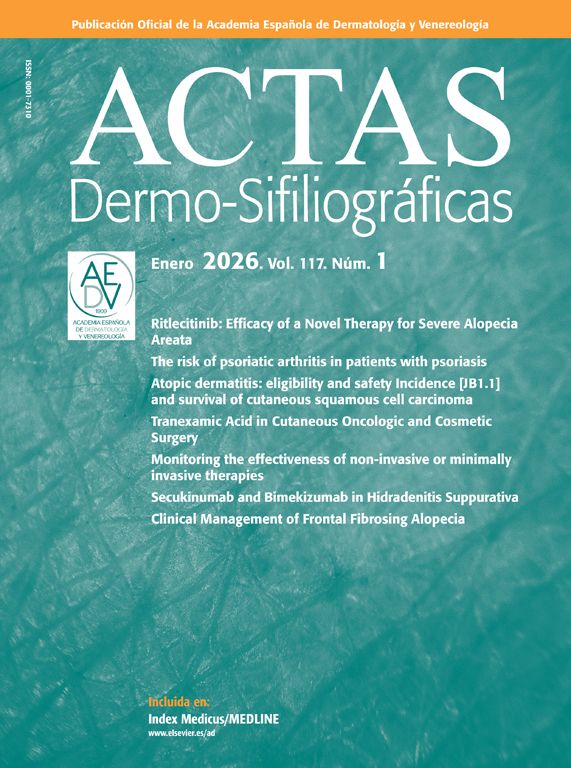
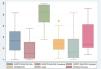
In the comparison of MF/SS-CTCL-QoL with Skindex-29, DLQI, and EORTC QLQ-C30 (question 30 only), the medians and interquartile ranges were 33.33 (16.67–50.00), 27.58 (18.10–36.20), 13.33 (3.33–36.67), and 26.79 (21.43–62.50) for the EORTC QLQ-C30, Skindex-29, DLQI, and MF/SS-CTCL-QoL, respectively (Table 3 and Fig. 1).
Overall results.
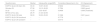
| Questionnaire | Median | Interquartile range(IQR) | Correlation(Spearman's rho) | ICC(Agreement) |
|---|---|---|---|---|
| EORTC QLQ-C30 (Item 30) | 33.33 | 16.67–50.00 | 0.5602 | 0.568 (poor) |
| Skindex-29 | 27.58 | 18.10–36.20 | 0.7394 | 0.865 (good) |
| DLQI | 13.33 | 3.33–36.67 | 0.8499 | 0.699 (moderate) |
| MF/SS-CTCL-QoL | 26.79 | 21.43–62.50 | – | – |
| EORTC QLQ-C30 total | 39.00 | 33.00–55.00 | 0.7486 | 0.601 (poor) |
| EORTC QLQ-C30 functional | – | – | 0.7776 | – |
| EORTC QLQ-C30 symptom | – | – | 0.6710 | – |
The correlation among the MF/SS-CTCL-QoL questionnaire and the DLQI, Skindex-29, and EORTC QLQ-C30 questionnaires showed Spearman's rho values of 0.8499, 0.7394, and 0.5602, respectively. Agreement among the MF/SS-CTCL-QoL and DLQI, Skindex-29, and the EORTC QLQ-C30 questionnaires yielded ICC values of 0.699 (moderate), 0.865 (good), and 0.568 (poor), respectively. Correlation (Spearman's rho) with the EORTC QLQ-C30 functional scale was 0.7776; with the symptom scale, 0.6710; and with the EORTC QLQ-C30 total score, 0.7486. Agreement between the questionnaires and the EORTC QLQ-C30 remained poor, with an ICC of 0.601.

Correlation analyses among the MF/SS-CTCL-QoL and DLQI, Skindex-29, and EORTC QLQ-C30 yielded Spearman's rho values of 0.8499, 0.7394, and 0.5602, respectively (Fig. 2).

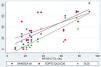
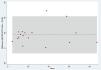
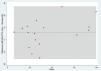
Agreement analyses24 among the MF/SS-CTCL-QoL and DLQI, Skindex-29, and EORTC QLQ-C30 showed intraclass correlation coefficient (ICC) values of 0.699 (moderate), 0.865 (good), and 0.568 (poor), respectively (Figs. 3–5).


To assess whether any of the EORTC QLQ-C30 dimensions showed better correlation or agreement with the MF/SS-CTCL-QoL, we analyzed the total sum of all EORTC QLQ-C30 items for each patient. In this case, the median score for the full EORTC QLQ-C30 was 39.00 (33.00–55.00).
Spearman's rho correlations with the EORTC QLQ-C30 functional scale, symptom scale, and total score were 0.7776, 0.6710, and 0.7486, respectively (Fig. 1 and Supplementary data 4). However, agreement24 between the MF/SS-CTCL-QoL and the full EORTC QLQ-C30 remained poor, with an ICC value of 0.601 (Fig. 6).

In summary, the high convergence with Skindex-29 (ICC, 0.865) and DLQI (ICC, 0.699) – which were a priori considered similar instruments – supports the convergent validity of the MF/SS-CTCL-QoL. The lower correlation with the EORTC QLQ-C30 (ICC, 0.568) suggests discriminant validity between these instruments.
DiscussionWe conducted a translation and cross-cultural adaptation of the MF/SS-CTCL-QoL questionnaire (Table 2). To assess its usefulness in routine clinical practice, we validated the Spanish version by evaluating its content validity in 17 adults with MF (n=14) and SS (n=3).
All items of the MF/SS-CTCL-QoL (Table 2) were considered understandable, relevant, and largely comprehensive. Furthermore, the instructions and response options were very well understood by the study participants. Most participants were very open, enjoyed sharing their experiences, and expressed appreciation for being able to collaborate in this project.
To our knowledge, this is the first study to provide a Spanish (Spain) version of the MF/SS-CTCL-QoL in which only native Spanish (Spain) speakers participated. For the use of the MF/SS-CTCL-QoL in other Spanish-speaking countries, further cross-cultural adaptation will be required through informative cognitive interviews specific to each country or territory.
Evidence has shown a correlation between clinical response and quality-of-life (QoL) response in patients with CTCL, highlighting the importance of incorporating QoL scales into global response scoring criteria to achieve a comprehensive assessment of treatment efficacy and patient well-being.13
The developers of the MF/SS-CTCL-QoL assessed convergent and discriminant validity using a correlation matrix among the MF/SS-CTCL-QoL QoL questionnaires, Skindex-29 questionnaires, and disease stage. Their hypothesis was that the MF/SS-CTCL-QoL would be significantly more strongly correlated with Skindex-29 than with lymphoma stage (discriminant validity).19 In their study, the correlation between MF/SS-CTCL-QoL and Skindex-29 (Spearman's rho=0.852; P<.001) was significantly higher than that between MF/SS-CTCL-QoL and disease stage (Spearman's rho=0.260; P<.001), supporting both convergent and discriminant validity.19
In our study, the results suggest convergent validity among the DLQI, Skindex-29, and MF/SS-CTCL-QoL questionnaires, as well as discriminant validity with respect to the EORTC QLQ-C30 in the assessment of QoL in patients with CTCL.
MF and SS are malignant conditions. The fact that the MF/SS-CTCL-QoL measures similar dimensions to those assessed by questionnaires focused on skin-related quality of life (whether malignant or not) opens the possibility for future versions that better capture the impact of the tumor component of MF/SS on patients’ QoL. Alternatively, other instruments could be developed to capture both tumor-related and cutaneous dimensions within a single tool.
This study has several important strengths. Regarding the MF/SS-CTCL-QoL questionnaire, its design specifically aimed at assessing QoL in patients with MF and SS allows for a precise and clinically relevant evaluation of patient experiences. However, some limitations should be acknowledged. One of the main limitations is the potential presence of bias, as all data were collected in a health care setting, which may not fully reflect patients’ everyday reality. Clinical environments can influence patient responses due to factors such as the presence of health care professionals, a controlled setting, and anxiety associated with medical visits. Although this bias likely affects only QoL data – which were not the primary endpoint – it remains an important consideration. Additionally, only 3 patients with SS were included, limiting the generalizability of the results for this subpopulation. Such a small sample size may not adequately represent the diversity of perspectives and symptoms among patients with SS, potentially affecting the validity and reliability of conclusions for this group.
ConclusionsIn this study, we validated a Spanish (Spain) version of the MF/SS-CTCL-QoL questionnaire that is equivalent to the original, ensuring accurate cross-cultural adaptation. The questionnaire was well accepted and well understood by patients. Positive associations were found with DLQI and Skindex-29, indicating interrelationships among these QoL measures. Construct validity was demonstrated by confirming convergent validity with similar questionnaires (Skindex-29 and DLQI) and discriminant validity with instruments measuring different constructs (EORTC QLQ-C30).
Overall, the MF/SS-CTCL-QoL questionnaire is a useful and valid tool for assessing QoL in Spanish patients with MF and SS. Its use may facilitate more individualized and effective care by better addressing patients’ specific needs, improving overall well-being, and advancing research in this clinical field.
Conflict of interestThe authors declare no conflict of interest.
We would like to thank Noelle Acheson, Mike Mejía, and Melissa Marie Dillon for their assistance with the translation, and the patients who were always willing to collaborate.
The following are the supplementary data to this article: