Clinical practice guidelines on the management of chronic spontaneous urticaria (CSU) include a series of recommendations that are not mandatory and depend on various circumstances related to both the physician and the patient. In addition, these guidelines leave several open questions, particularly regarding the management of antihistamines,1 which is why we sought to determine the usual clinical practice related to antihistamine management in patients with CSU, with special emphasis on those who initiate treatment with omalizumab.
Therefore, we created a16-item# questionnaire, in which only 1 response could be selected per question (except for Item# 13, which allowed multiple selections, and Item# 16, which invited open comments). The questionnaire was distributed among dermatologists and allergists across Spain with experience in managing omalizumab in CSU and was completed online fully anonymously (Table 1). A total of 73 specialists responded (77% dermatologists and 23% allergists) from different regions across Spain.
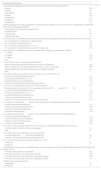
Summary of survey responses on usual clinical practice in patients with chronic spontaneous urticaria treated with omalizumab regarding antihistamine management.
| Question/response options | % |
|---|---|
| 1. Regarding the antihistamines used to treat CSU, which is your first-choice antihistamine? | |
| Bilastine | 38.4 |
| Cetirizine | 26 |
| Desloratadine | 9.6 |
| Ebastine | 9.6 |
| Levocetirizine | 8.2 |
| Rupatadine | 5.5 |
| Fexofenadine | 2.7 |
| 2. Before switching from a first antihistamine to another treatment (another antiH or omalizumab) in inadequately controlled CSU (aimed at evaluating dose escalation): | |
| I directly switch if no response to standard dose | 0 |
| I double the dose | 67 |
| I triple the dose | 18 |
| I quadruple the dose | 15 |
| 3. In uncontrolled CSU despite intensified antihistamines, prior to switching to omalizumab (to determine use of a 2nd antiH): | |
| I try a 2nd-generation antihistamine at standard dose | 1.4 |
| I try a 2nd antiH at intensified dose (2×) | 6.8 |
| I try a 2nd antiH at intensified dose (3× or 4×) | 39.7 |
| If no response to first antihistamine, go directly to omalizumab | 52.1 |
| 4. How long do you wait before making any changes (dose or drug) in a non-responder to antiH? | |
| 1–2 weeks | 11 |
| 3–4 weeks | 57.5 |
| 5–6 weeks | 24.7 |
| Other | 6.8 |
| 5. At the initiation visit for omalizumab (usual behavior): | |
| I advise continuing intensified antihistamine dosing until first follow-up | 45.2 |
| I advise patients they may reduce antihistamine dose if urticaria is controlled | 46.6 |
| I advise patients they may stop antihistamines if completely controlled | 8.2 |
| Other | 0 |
| 6. At follow-up after omalizumab if CSU is controlled (UAS7 ≤6 and/or UCT ≥12): | |
| I continue intensified antihistamine dosing | 6.8 |
| I de-intensify antihistamines (2× or 3×) | 56.2 |
| I prescribe standard-dose antihistamines | 15.1 |
| I maintain current antihistamine dose regardless of level | 15.1 |
| I discontinue antihistamines and continue omalizumab alone | 6.8 |
| 7. At follow-up after omalizumab if CSU is completely controlled (UAS7=0 and/or UCT=16): | |
| I continue intensified antihistamine dosing | 5.6 |
| I de-intensify antihistamines (2× or 3×) | 27.8 |
| I prescribe standard-dose antihistamines | 9.7 |
| I maintain current antihistamine dose | 5.6 |
| I discontinue antihistamines and continue omalizumab alone | 51.4 |
| 8. In a patient on omalizumab+antiH in whom omalizumab is being de-intensified due to good response: | |
| I continue intensified antihistamines | 5.6 |
| I continue standard-dose antihistamines | 26.4 |
| I maintain current antihistamine dose | 34.7 |
| I discontinue antihistamines | 33.3 |
| 9. In a patient on omalizumab+antiH in whom omalizumab is discontinued due to good response: | |
| I continue intensified antihistamines | 5.5 |
| I continue standard-dose antihistamines | 23.3 |
| I maintain current antihistamine dose | 32.9 |
| I discontinue antihistamines | 38.4 |
| 10. In a well- or fully-controlled patient on omalizumab who has discontinued antihistamines on their own: | |
| I maintain omalizumab with antihistamines stopped | 91 |
| Other | 9 |
| 11. If omalizumab must be intensified due to poor response: | |
| I intensify omalizumab+intensified antihistamines | 60 |
| I intensify omalizumab regardless of antihistamine dose | 40 |
| 12. Do you act the same way in inducible urticarias as in CSU? | |
| Usually yes | 98 |
| Usually no | 2 |
| 13. What behavior do you think your patients usually have regarding your instructions about antihistamines while on omalizumab? (multiple choice) | |
| I think they always follow my instructions | 6.8 |
| I think they follow them only when poorly controlled | 28.8 |
| I think they reduce the dose on their own when well controlled | 86.3 |
| I think they reduce the dose on their own regardless of control | 9.6 |
| 14. What is your medical specialty? | |
| Dermatology | 77 |
| Allergology | 23 |
More than 80% of respondents reported intensifying antihistamine doses (3× or 4×) before initiating omalizumab treatment, as recommended by the European clinical practice guidelines.1 A total of 52% proceeded to the biologic without first trying a 2nd antihistamine, whereas 48% attempted a 2nd antihistamine before omalizumab administration. The latter strategy is recommended in certain guidelines, such as the Spanish guidelines from 20152 and the current British guidelines,3 whereas the European guidelines are less explicit and allow transition to omalizumab after failure of the first antihistamine.1
Clinical behavior becomes more heterogeneous once omalizumab is started. A substantial proportion of specialists report continuing antihistamines at various doses, although the general trend is to taper or discontinue them, particularly when the patient is well controlled or has already self-reduced or stopped antihistamines due to good response to omalizumab. Even at the initial omalizumab visit, more than half of specialists advise patients that they may taper or even discontinue antihistamines if their urticaria is well controlled. In the same line, when omalizumab is optimized or discontinued, clinicians in this study reported decreasing antihistamine doses or discontinuing them in 33% and 38% of cases, respectively.
Nevertheless, a widespread practice is the use of antihistamines on demand, allowing patients to discontinue them if they have done so due to good control with omalizumab. This aligns with the belief of 86% of respondents that patients independently reduce or stop antihistamines when they feel well controlled, even if not explicitly instructed to do so. This belief has been supported by two recent studies in Spain. In one study based on patient surveys, 24% reported having independently discontinued antihistamines (71% due to improvement) after starting omalizumab.4 In the other study, the quantity of antihistamines dispensed at pharmacies was evaluated and found to be significantly lower than the amount prescribed by their dermatologists.5
Finally, although there are no clearly established guidelines for omalizumab use in inducible chronic urticaria, clinical practice in 98% of cases mirrors that used for CSU.
In conclusion, although the behavior of Spanish specialists after initiating omalizumab is highly heterogeneous, the tendency is to taper or discontinue antihistamines. This likely reflects the absence of clear guideline recommendations and the lack of consistent positions in the literature. Some authors advocate maintaining antihistamine use,6,7 while others recommend reducing or discontinuing them, as they have previously failed and omalizumab alone is capable of controlling symptoms in most patients.8 Still others support patient-directed, on-demand antihistamine use depending on disease control,9 a practice that real-world data have shown to be common among a considerable proportion of patients.4,5
To our knowledge, no similar study has been published. Although this survey may contain selection and recall biases, it reflects usual clinical practice among physicians who manage these patients. We did not observe differences based on geographic region or between dermatologists and allergists. Understanding real-world clinical practice may contribute to improved patient management. Further work is needed to refine antihistamine management in these patients and to establish evidence-based recommendations that can help standardize practices with the patient's benefit in mind.
Conflict of interestThe authors declare no conflict of interest.
We thank the members of the Grupo de Urticaria de la Sección Centro (UCEN), the Xarxa d’Urticària Catalana i Balear, the Grupo Español en Investigación de Alergia Cutánea (GEIDAC), and other specialists from various regions of the country, who anonymously and altruistically contributed to this work.