We have observed several pigmented condylomata acuminata that were clinically similar to seborrheic keratoses, with positive genotyping for human papillomavirus (HPV) and histologic findings of seborrheic keratosis alongside signs of HPV infection. We have coined the term ‘seborrheic keratosis-like pigmented condylomas.’1
We conducted a retrospective, observational study including all patients with this subtype of condyloma evaluated in the sexually transmitted infection (STI) clinic of our hospital from April 1st, 2022 through October 30th, 2024.
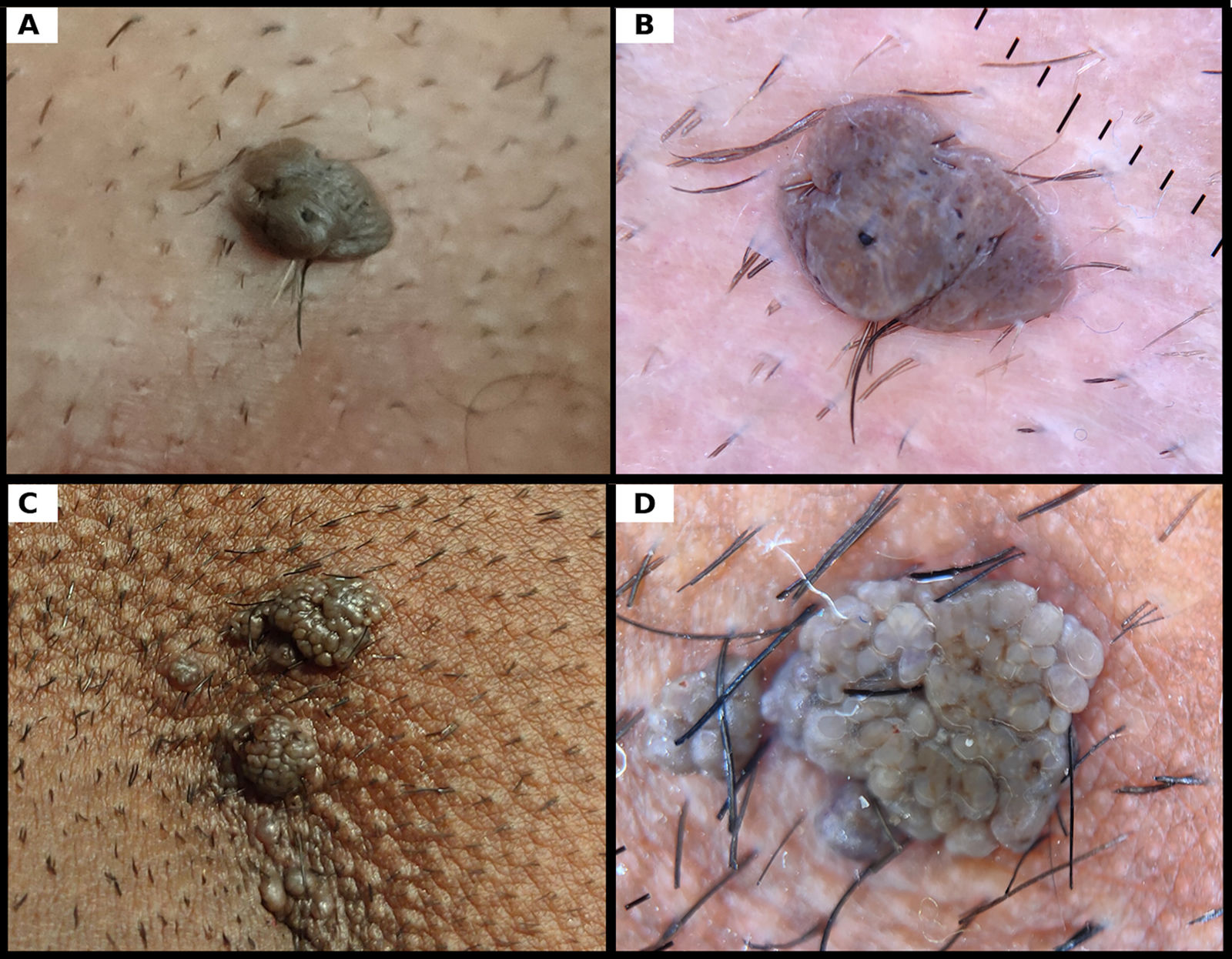
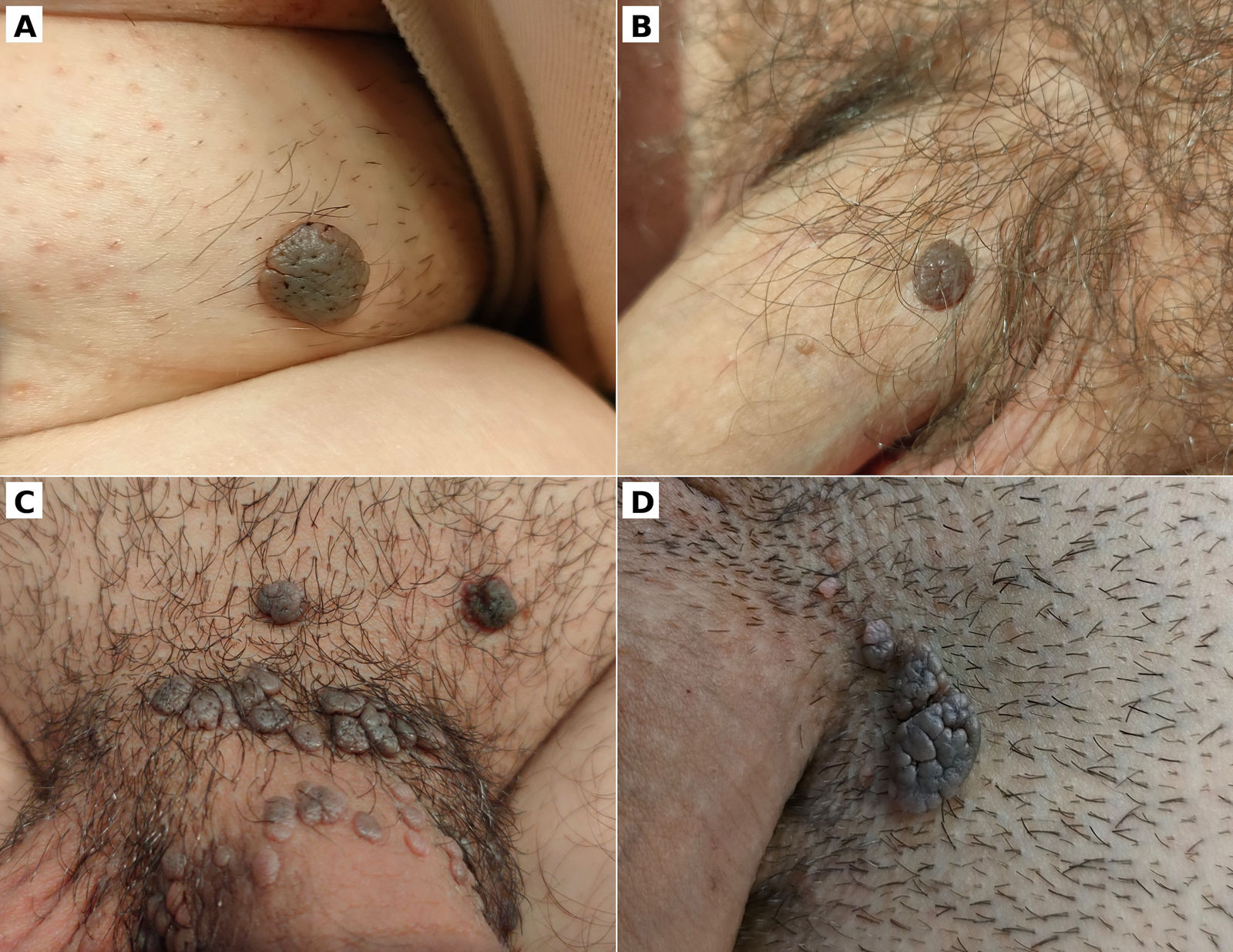
Lesions were classified as seborrheic keratosis-like condylomas if they met the following criteria: verrucous, exophytic lesions; well-demarcated; smooth (non-papillomatous) surface; hyperpigmented; located in the genital, perianal, pubic, or inguinal areas; and positive HPV genotyping for mucosal/alpha HPV types.
A total of 62 patients with seborrheic keratosis-like pigmented condylomas were identified: 55 men (most patients in this STI clinic are men) and 7 women, with a mean age of 36.7 years (median, 34.5; SD, 9.69).
Isolated lesions (<5 lesions) were observed in 29 patients (46.8%), whereas 33 patients (53.2%) presented with >5 lesions. In 33.8% (21 patients), polymorphic or mixed lesions were present (coexistence of these pigmented condylomas with more typical condylomas – exophytic, papillomatous, flesh-colored) (Figs. 1 and 2).


A tissue sample was obtained from all lesions for HPV genotyping by PCR (Allplex II HPV 28 detection method, Seegene Inc.), which detects 28 mucosal/alpha HPV types (19 high-risk [HR] and 9 low-risk [LR]). Genotyping was positive for HPV in all cases; HPV-6 was detected in 56 lesions (91.4%). In 15 of these cases (26.7%), multiple HPV types coexisted with HPV-6 (11 HR-HPV, 4 LR-HPV). In 6 cases (9.6%), HPV types other than HPV-6 were detected (3 HPV-16; 2 HPV-11; 1 HPV-44/56).
Lesions showed slow growth (>1-year history) in 40 patients (64.5%). No statistically significant association was found (p>0.05) between slow growth and HR-HPV or the presence of multiple HPV genotypes in the same case.
No statistically significant association (p>0.05) was found either between mixed lesions and the presence of multiple HPV types.
The most frequent location was the penile base and/or pubis (53 cases; 83%).
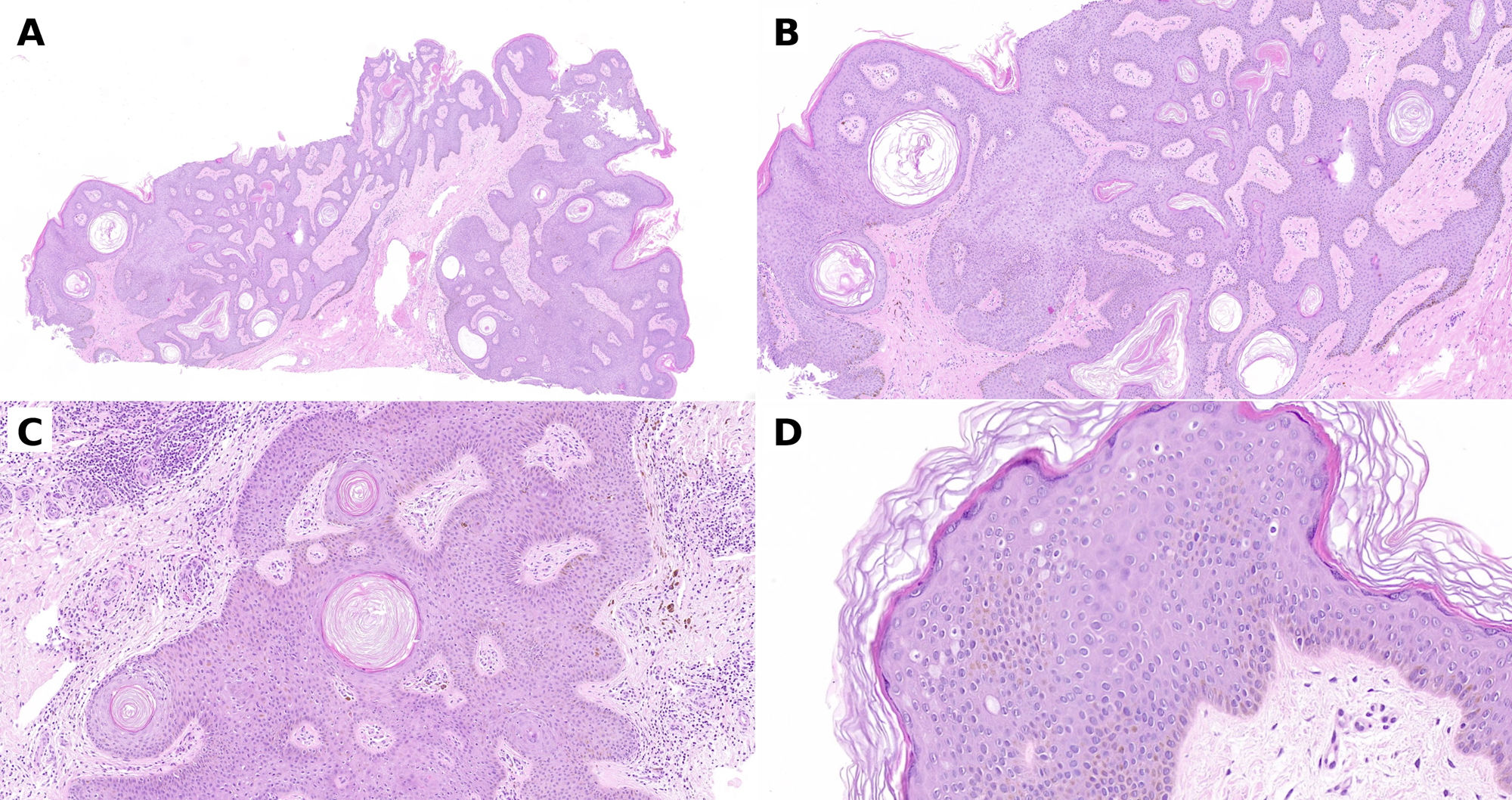
Curettage and electrocoagulation were performed in 11 lesions for histopathologic examination (hematoxylin–eosin staining). Histologic findings were similar in all cases: exophytic lesions with features of seborrheic keratosis coexisting with signs of HPV infection (Fig. 3).

Why do we believe these lesions represent pigmented condylomata acuminata rather than seborrheic keratoses? All lesions were exclusively located in the genital area, with no lesions on the face or trunk (although seborrheic keratoses may rarely occur exclusively in the genital region). The patient age was lower than expected for typical seborrheic keratoses. HPV was confirmed by PCR in all cases. Additionally, mixed morphology was frequently present, with coexistence of these pigmented lesions and classic condylomas.
Li and Ackerman (1994) already proposed that seborrheic keratoses with histologic signs of HPV infection were, in fact, condylomas.2 Several histologic studies investigating HPV in seborrheic keratoses from genital and extra-genital areas3 show variable positivity rates (42%,4 53%,5 or 70%6), with HPV-6 being most common. It is likely that positivity rates would be higher today with modern PCR techniques.
We recently published a series of 31 similar cases of ‘seborrheic keratosis-like pigmented condylomas’1 with comparable findings: most cases were HPV-6+ (28/31, 90.3%), predominantly located on the penile base and pubis, and with >1-year history in 67.7% of patients. Only 10 similar case reports have been found in the literature – 5 single-case reports and 1 5-case series published in 1980.7–9
However, we believe this type of pigmented seborrheic keratosis-like condyloma is probably much more frequent in routine clinical practice than the limited literature suggests.
Diagnosis in these 62 cases was primarily based on clinical and dermoscopic criteria,10 along with HPV genotyping. The differential diagnosis should include acquired melanocytic nevi, seborrheic keratoses, and bowenoid papulosis (which shows glomerular vessels on dermoscopy, bowenoid epidermal changes on biopsy, and predominance of HR-HPV such as HPV-16).
Study limitations include its observational design, the sample size, and the fact that not all lesions underwent histologic confirmation.
In conclusion, wer reported 62 genital pigmented condylomata acuminata that we designate as ‘seborrheic keratosis-like.’ The vast majority were HPV-6+, most were located at the penile base and/or pubis, and evolution extended beyond one year in most cases.
Conflicts of interestThe authors declare no conflicts of interest.