
 Artículo disponible en español
Alopecia areata (AA) is a non-scarring autoimmune alopecia.1 Beyond follicular damage, it has a significant impact on the patients’ quality of life, a particularly relevant aspect in the pediatric population, where social acceptance plays a crucial role in emotional development.2
In recent years, three Janus kinase inhibitors (JAK inhibitors, iJAKs) have been approved for the treatment of AA: baricitinib, deuruxolitinib, and ritlecitinib, the latter being the only one approved for pediatric patients aged 12–18 years.3
However, studies in pediatric populations remain scarce, especially in real-world clinical settings or direct drug comparisons.
We conducted a retrospective multicenter study in four hospitals in the Valencian Community, including pediatric patients (<18 years) with AA treated with iJAKs through December 2024. Only the first iJAK administered to each patient was considered. Baseline characteristics, safety, and efficacy were collected using validated scales: the Severity of Alopecia Tool (SALT) for scalp involvement, the Eyebrow Assessment Scale (EBA), and the Eyelash Assessment Scale (ELA).
A total of 17 patients were included (9 on baricitinib, 7 on tofacitinib, and 1 on ritlecitinib). Males accounted for 46.7% of the cohort, with a median age of 13 years (range, 2–17) at initiation of iJAK therapy and a median course of the disease of 56 months (range, 3–120).
Most patients exhibited a high disease burden, with alopecia universalis being the most frequent subtype (58.8%), and along with alopecia totalis accounting for 76.4% of the cohort. More than 80% of patients had eyebrow and eyelash involvement. All had received prior treatments, and >75% had undergone ≥3 therapeutic lines prior to iJAK initiation.
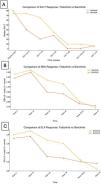
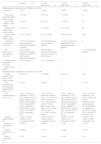
The median baseline SALT score was 80 (range, 3–100), which progressively dropped down to 1.5 (range, 0–18) at weeks 48–52, remaining stable in patients followed beyond 1 year (up to 72 weeks) (Fig. 1 and Supplementary Fig. 1). A total of 88.2% (14/17) of patients achieved an adequate response (SALT <20), and 76.5% (13/17) achieved SALT <2 during follow-up. Similar improvements were observed in the EBA and ELA scales, with most patients reaching the maximum score of 3 (complete regrowth) within the same timeframe. The safety profile of iJAKs was favorable. Six patients (35.3%) – 3 on baricitinib and 3 on tofacitinib – experienced mild adverse events, including acne, impetigo, and abdominal pain. All events were classified as mild and possibly treatment-related (Tables 1 and 2).

Baseline characteristics of patients and disease.
| Overall(n=17) | 1st iJAK baricitinib(n=9) | 1st iJAK tofacitinib(n=7) | 1st iJAK ritlecitinib(n=1) | |
|---|---|---|---|---|
| Baseline patient characteristics at initiation of 1st iJAK | ||||
| Male sex, n (%) | 7 (46.7) | 3 (33.3) | 3 (42.9) | 1 (100) |
| Current age (December 2024), median (range) | 14 (5–23) | 14 (9–19) | 17 (9–23) | 14 |
| Age at iJAK initiation, median (range) | 13 (2–17) | 10 (2–16) | 14 (12–17) | 13 |
| Weight at iJAK initiation (kg), median (range) | 44 (13–87) | 41 (15–87) | 46 (13–67) | 58 |
| Height at iJAK initiation (cm), median (range) | 147 (112–183) | 135 (112–183) | 156 (145–174) | 180 |
| Autoimmune comorbidities, n (%), which | 3 (17.6)• Autoimmune hypothyroidism (3 patients)• Prediabetes (1 patient) | 2 (22.2)•Autoimmune hypothyroidism (2 patients) | 1 (14.3)• Autoimmune hypothyroidism and prediabetes (same patient) | 0 |
| Non-autoimmune comorbidities, n (%), which | 5 (29.4)• Atopic dermatitis (3)• Allergic rhinoconjunctivitis (1)• Anal fistula (1)• Intellectual disability (1) | 4 (44.4)• Atopic dermatitis (3)• Allergic rhinoconjunctivitis (1)• Anal fistula (1) | 0 | 1 (100)• Intellectual disability |
| Cardiovascular risk factors*, n (%), which | 1 (5.9)• Obesity (1) | 1 (11.1)• Obesity (1) | 0 | 0 |
| Other relevant history** | 0 | 0 | 0 | 0 |
| Baseline disease characteristics at initiation of 1st iJAK | ||||
| Disease duration to iJAK start, months, median (range) | 56 (3–120) | 72 (48–86) | 45 (3–72) | 120 |
| Prior spontaneous or pharmacologic regrowth before iJAK, n (%) | 3 (17.6) | 2 (22.2) | 0 | 1 (100) |
| Prior treatments before iJAK, n (%) | • Any: 17 (100)• ≥3 treatments: 13 (76.5)• TCS: 14 (82.4)• ILCS: 6 (35.3)• Prednisone: 4 (23.5)• Steroid pulses: 7 (41.2)• Topical MNX: 7 (41.2)• Oral MNX: 4 (23.5)• DPCP: 8 (47.1)• CyA: 3 (17.6)• MTX: 7 (41.2)• Dupilumab: 1 (5.9) | • Any: 9 (100)• ≥3 treatments: 8 (88.8)• TCS: 7 (77.7)• ILCS: 4 (44.4)• Prednisone: 1 (11.1)• Steroid pulses: 5 (55.5)• Topical MNX: 4 (44.4)• Oral MNX: 2 (22.2)• DPCP: 5 (55.5)• CyA: 1 (11.1)• MTX: 3 (33.3)• Other: 0 | • Any: 7 (100)• ≥3 treatments: 5 (71.4)• TCS: 6 (85.7)• ILCS: 2 (28.6)• Prednisone: 3 (42.9)• Steroid pulses: 2 (28.6)• Topical MNX: 3 (42.9)• Oral MNX: 2 (28.6)• DPCP: 2 (28.6)• CyA: 2 (28.6)• MTX: 4 (57.1)• Dupilumab: 1 (14.3) | • Any: 1 (100)• ≥3 treatments: 0 (0)• TCS: 1 (100)• ILCS: 1 (100)• Prednisone: 0 (0)• Steroid pulses: 0 (0)• Topical MNX: 0 (0)• Oral MNX: 0 (0)• DPCP: 1 (100)• CyA: 0 (0)• MTX: 0 (0)• Other: 0 (0) |
| Alopecia areata subtype, n (%) | • Patchy: 4 (23.5)• Totalis: 3 (17.6)• Universalis: 10 (58.8) | • Patchy: 3 (33.3)• Totalis: 2 (22.2)• Universalis: 4 (44.4) | • Patchy: 1 (14.2)• Totalis: 0 (0)• Universalis: 6 (85.8) | • Patchy: 0 (0)• Totalis: 1 (100)• Universalis: 0 (0) |
| Eyebrow involvement, n (%) | 14 (82.4) | 6 (66.6) | 7 (100) | 1 (100) |
| Eyelash involvement, n (%) | 15 (88.2) | 7 (77.7) | 7 (100) | 1 (100) |
| Beard involvement, n (%)*** | 3 (75) | 1 (100) | 2 (100) | 0 (0) |
ILCS: intralesional corticosteroids; TCS: topical corticosteroids; CyA: cyclosporine A; DPCP: diphenylcyclopropenone; iJAK: Janus kinase inhibitor; MNX: minoxidil; MTX: methotrexate.
Safety and efficacy of iJAKs in our series.
| Overall(n=17) | 1st iJAK baricitinib(n=9) | 1st iJAK tofacitinib(n=7) | 1st iJAK ritlecitinib(n=1) | |
|---|---|---|---|---|
| Initial dose, n (%) | – | 2mg q24h: 3 (33.3); 4mg q24h: 6 (66.6) | 5mg q24h: 3 (42.9); 5mg q12h: 4 (57.1) | 50mg q24h: 1 (100) |
| Dose escalation during treatment for nonresponse*, n (%) | – | 0 (0) | 3 (42.9) | 0 (0) |
| Treatment duration, months, median (range) | 35 (1–72) | 50 (23–72) | 23 (1–52) | 5 |
| Response**, n (%) | • NR: 2 (11.8)• PR: 0• CR: 13 (76.5)• PR/CR with secondary failure: 1 (5.9)• Not evaluable: 1 (5.9) | • NR: 2 (22.2)• PR: 0 (0)• CR: 6 (66.6)• PR/CR with secondary failure: 0 (0)• Not evaluable: 1 (11.1) | • NR: 0 (0)• PR: 0 (0)• CR: 6 (85.7)• PR/CR with secondary failure: 1 (14.3)• Not evaluable: 0 (0) | • NR: 0 (0)• PR: 0 (0)• CR: 1 (100)• PR/CR with secondary failure: 0 (0)• Not evaluable: 0 (0) |
| Time to response, months, mean (SD) | 1.7 (0.9) | 2.2 (1.1) | 1.4 (0.5) | 1.5 (0) |
| Dose reduction for good response, n (%) | 3 (17.6) | 0 (0) | 3 (42.9) | 0 (0) |
| Concomitant therapy with iJAK, n (%), type | 6 (35.3):• Topical minoxidil: 1 (5.9)• Oral minoxidil: 3 (17.6)• Minoxidil+steroid injections: 2 (11.8) | 2 (22.2):• Topical minoxidil: 1 (11.1)• Oral minoxidil: 1 (11.1) | 4:• Oral minoxidil: 2 (28.6)• Minoxidil+steroid injections: 2 (28.6) | 0 |
| Any adverse event, n (%) and type | 6 (35.3):• Symptomatic ↑CK: 2 (11.8)• Acne: 1 (5.9)• Impetigo: 1 (5.9)• Abdominal pain: 1 (5.9)• Seborrheic dermatitis: 1 | 3 (33.3):• Symptomatic ↑CK: 1 (11.1)• Abdominal pain: 1 (11.1)• Seborrheic dermatitis: 1 (11.1) | 3 (42.9):• Symptomatic ↑CK: 1 (14.3)• Acne: 1 (14.3)• Impetigo: 1 (14.3) | 0 |
| Time to adverse event, months, median (range) | 3 (2–13) | 3 (2–10) | 6 (4–13) | – |
| Continuation of first iJAK at data cutoff***, n (%), reason for discontinuation | 14 (82.4):• Inefficacy and switch to iJAK: 1 (11.8)• Sustained complete response: 1 (11.8)• Adverse events: 1 (11.8) | 8 (88.9):• Adverse events: 1 (11.1) | 5 (71.4):• Inefficacy and switch to iJAK: 1 (14.3)• Sustained complete response: 1 (14.3) | 1 (100) |
CK: creatine kinase; EBA: Eyebrow Assessment Scale; ELA: Eyelash Assessment Scale; iJAK: Janus kinase inhibitor; NR: no response; CR: complete response; PR: partial response; wk: week; SALT: Severity of Alopecia Tool.
Applicable when starting below the maximum dose (baricitinib 4mg q24h; tofacitinib 10mg q12h; ritlecitinib 50mg q24h).
CR (complete response): SALT <2 without secondary failure during follow-up; PR (partial response): improvement from baseline SALT but without achieving SALT <2 during follow-up; NR (no response): no SALT improvement during follow-up; PR/CR with secondary failure: initial SALT improvement with subsequent worsening; not evaluable: follow-up <4–8 weeks.
We present a multicenter study suggesting the effectiveness safety and efficacy profile of iJAKs, primarily baricitinib and tofacitinib, in pediatric AA. Notably, this cohort was characterized by patients with high disease burden, frequent total and universal forms, and multiple prior treatments, likely reflecting their use in refractory, heavily pretreated cases. Additionally, the relatively high number of patients on tofacitinib reflects its prescription prior to the approval of baricitinib and ritlecitinib.
Until recently, treatment options for AA were largely limited to classic immunosuppressants such as systemic corticosteroids, cyclosporine, or methotrexate – agents with limited efficacy and frequent side effects.4 However, the discovery within the past decade of the role of the JAK pathway in the pathogenesis and maintenance of AA led to the approval by the European Medicines Agency (EMA) and U.S. Food and Drug Administration (FDA) of baricitinib (4mg/day in patients ≥18 years)5 and ritlecitinib (50mg/day in patients ≥12 years).6 Recently, deuruxolitinib, another JAK1/JAK2 inhibitor, has been approved by the FDA for patients ≥18 years.7 The approval of ritlecitinib in adolescents was based on the phase IIb/III ALLEGRO trial, which reported SALT ≤20 in 50% of patients at week 48, with an acceptable safety profile.6 Evidence for baricitinib in pediatric patients remains limited, though 1 case has described its efficacy and tolerability in a 17-year-old patient.8 Baricitinib is currently under investigation in a phase III clinical trial (BRAVE-AA-PEDS) for children aged 6–18 years with severe AA. At the same time, multiple series have supported the off-label use of tofacitinib in pediatric populations due to its safety and efficacy,9 despite its lack of formal approval or ongoing trials. These data have led recent European clinical practice guidelines to position iJAKs as first-line therapy for severe AA (SALT >20).10Supplementary Table 18,11–39 illustrates the main studies evaluating iJAKs for AA in real-world clinical practice.
The present study has several limitations. First, its retrospective design inherently carries limitations. Second, the small sample size and multiple observations prevented direct comparisons across drugs. Nonetheless, in our cohort, baricitinib and tofacitinib showed comparable safety and efficacy overall. Similarly, the small sample did not allow us to draw any conclusions on key clinical decisions such as dose adjustment, tapering strategies, or concomitant therapies.
Lastly, certain variables – such as nail involvement, patient preferences and satisfaction, and psychological well-being (particularly important in pediatric patients) – were not recorded.
In conclusion, this multicenter series suggests that JAK inhibitors are safe and effective treatments for pediatric AA, producing significant regrowth on the scalp, eyebrows, and eyelashes with only mild adverse effects. Further prospective studies with larger sample sizes and longer follow-up are warranted to confirm these findings.
The following are the supplementary data to this article: