
The ability of social media (SM) to disseminate information is undeniable. Over the past two decades, user participation has increased exponentially, and its application in the field of dermatology has grown significantly in recent years.1
We conducted a cross-sectional study designed to assess current dynamics between dermatology and the use of SM, using Instagram as the dissemination platform.
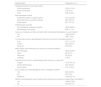
The questionnaire consisted of 16 multiple-choice questions (Table 1). To maximize its reach and avoid bias, it was shared across more than 20 accounts belonging to various Spanish dermatologists with professional Instagram profiles. A total of 2331 individuals participated, of whom 2166 were women (93%) and 161 men (7%). Among respondents, 1350 (58%) were non-healthcare professionals, 836 (36%) were healthcare professionals who were not dermatologists, and 141 (6%) were dermatologists.
Summary of the main survey questions.
| Question/Item | Response (n, %) |
|---|---|
| Preferred format for consuming content | |
| Video-format post | 1095 (47.2%) |
| Photo-format post | 719 (31%) |
| Story | 506 (21.8%) |
| Most requested content | |
| Explanatory posts on specific topics | 1214 (52.2%) |
| Information about cosmetic products | 593 (25.5%) |
| Case reports | 281 (12.1%) |
| Preferred type of profile | |
| Dermatologist's professional profile | 2056 (88.9%) |
| Dermatology clinic profile | 258 (11.1%) |
| Have you changed your skincare habits after following dermatologists on social media? | |
| Yes | 1966 (84.6%) |
| No | 358 (15.4%) |
| To what extent does a dermatologist influence your choice of cosmetic products? | |
| A lot | 1671 (71.1%) |
| A little | 593 (25.5%) |
| Not at all | 66 (2.8%) |
| Which figure most influences your choice of cosmetic products? | |
| Dermatologist | 2243 (96.5%) |
| None | 63 (2.7%) |
| Influencer | 18 (0.8%) |
| Celebrity | 0 (0%) |
| How would you look for a dermatologist upon arriving in a new city? | |
| 1072 (46.1%) | |
| Asking other people | 940 (40.4%) |
| Social media | 314 (13.5%) |
| Do you prefer your dermatologist to have an Instagram profile? | |
| Yes | 846 (36.3%) |
| No | 38 (1.6%) |
| Indifferent | 1446 (62.1%) |
| Would a dermatologist's social media profile influence your decision to attend their consultation? | |
| Yes | 1566 (67.3%) |
| No | 760 (32.7%) |
A total of 47.2% preferred video-format posts, 31% preferred photo-format posts, and 21.8% preferred “stories.”
The most highly requested content consisted of explanatory posts on specific topics (acne, melanoma, photoprotection, etc.) (52.2%), followed by information about cosmetic products (25.5%) and clinical cases (12.1%). These findings are consistent with those reported by Sierro et al.,2 who analyzed user engagement depending on the type of content shared by leading dermatology “influencers.” Educational posts achieved the highest average engagement, followed by personal posts, professional achievements, and sponsored content.
A significant 88.9% preferred the dermatologist's professional profile over the dermatology clinic profile. The factor most highly valued when deciding to follow a dermatology profile on Instagram was content quality (80.3%), followed by a personal connection with the professional (15.8%).
One of the most notable findings is that up to 84.6% reported having changed their skincare habits (such as photoprotection, facial skincare routines, or nevus checks) after following dermatologists on SM. This highlights the potential of these platforms for dermatologists to educate the public about skin health.3,4
Another question in the survey evaluated the extent to which dermatologists influence consumers in choosing cosmetic products. A total of 71.7% stated that dermatologists influenced them greatly. In fact, 96.5% indicated that the dermatologist is the figure that would influence them the most in this regard, completely minimizing the role of influencers or celebrities.
When asked how they would find a dermatologist if they moved to a new city, slightly more than half said they would search on Google or social media (53.9%), highlighting the current importance of maintaining visibility on digital platforms.
Although most respondents (62.1%) stated that it was irrelevant whether the dermatologist had a social media profile, 36.3% preferred that they did. Moreover, 67.3% acknowledged that if the dermatologist had an SM profile, it would influence their decision to consult them (either positively or negatively). It has been suggested that dermatologists with an SM presence receive higher patient ratings on physician-rating websites.5
Despite the large sample size, the fact that the survey was disseminated exclusively through Spanish dermatologists’ accounts may represent a limitation of the study. Future studies in which the questionnaire is shared by non-dermatology profiles—thereby broadening the target audience—would be of interest, as well as comparing the results.
SM has transformed the way people interact, communicate, and share information across all fields, including dermatology. It provides an accessible and far-reaching medium through which professionals can share knowledge and experiences with colleagues worldwide, fostering collaboration. On the other hand, it is also a powerful tool for educating and raising public awareness about skin health. The population increasingly demands more information, and it is our responsibility as dermatologists to contribute proactively with high-quality content to counteract misinformation disseminated by non-scientific sources.
Conflict of interestThe authors declare that they have no conflict of interest.