



The AEDV CUDERMA project aims to certify dermatology units to standardize clinical practice and ensure quality of care. In line with previous initiatives in psoriasis and dermato-oncology, this study aimed to reach consensus on the aspects to be assessed through quality indicators for the certification of hidradenitis suppurativa (HS) units.
MethodsA literature review and a focus group involving dermatologists specializing in the management of patients with HS were conducted to develop a preliminary set of quality indicators, which were subsequently reviewed by a multidisciplinary group of experts. The relevance of these preliminary indicators was then evaluated by a Delphi panel comprising 43 members of the Spanish Hidradenitis Suppurativa Working Group.
ResultsThe Delphi panel reached consensus on the inclusion of 52 quality indicators.
ConclusionThese indicators will subsequently be standardized for the development of the certification standard for HS units.
Hidradenitis suppurativa (HS) is a chronic inflammatory skin disease characterized by the development of nodules, abscesses, and draining tunnels, located predominantly, although not exclusively, in body folds rich in apocrine glands.1–3 These lesions have a major impact on patients’ physical and mental health and quality of life,4 and may even lead to suicide.5
Meta-analyses of epidemiological data on HS suggest that its prevalence may range from 0.4% to 1.7%,6 although the exact figure remains unknown. In Spain, it has been estimated that >500,000 people may have HS based on these estimates.6,7 Accordingly, the Spanish Academy of Dermatology and Venereology (AEDV), in collaboration with the Spanish Hidradenitis Suppurativa Working Group (GETHS), has promoted the creation of the Spanish Hidradenitis Suppurativa Registry (REHS).7 During its first year of operation, the REHS has collected data from >350 patients from 23 different centers7; therefore, it is expected to generate accurate evidence over the coming years regarding the epidemiology, demographics, prescribing patterns, and clinical characteristics of HS in Spain.
Given the variety of medical and surgical treatments available for the management of HS,8,9 the need for a multidisciplinary approach, and its clinical and epidemiological characteristics,6,7 management of HS in specialized units is essential. In this context, the AEDV CUDERMA initiative (Certification of Dermatology Units) represents a key opportunity to standardize care for patients with HS throughout Spain while ensuring quality of care in this field.
In line with former projects conducted in psoriasis10 and dermato-oncology,11 the CUDERMA initiative seeks to define a set of quality indicators that will enable units applying for certification to obtain AEDV-endorsed accreditation.10,11 These units must demonstrate compliance with quality standards relating to their structure, processes, and outcomes.12 Structure indicators assess, among other aspects, the availability of appropriate facilities, health care personnel, and equipment. Process indicators refer to the procedures followed by the unit in managing patients. Finally, outcome indicators focus on measuring the clinical outcomes achieved through the care provided by the unit.12
Within the framework of the CUDERMA project,10,11 the objective of this study was to reach consensus on the aspects that should be included in quality indicators for the certification of HS units.
Material and methodsWorking groupThis study was led by a Scientific Committee comprising 6 dermatology specialists with experience in the management of patients with HS, all of whom were members of the AEDV and the GETHS. To ensure methodological rigor, the Scientific Committee was supported by three methodology specialists.
Identification, selection, and review of potential indicatorsIndicators of potential relevance for the certification of HS units were identified through a focus group involving the entire Scientific Committee.
Before this meeting, a literature review was conducted in accordance with the Preferred Reporting Items in Systematic Reviews and Meta-Analyses (PRISMA) guidelines.13 The objective was to identify studies reporting potential aspects to be measured by future quality indicators for the certification of HS units. The literature search was conducted in PubMed on June 11, 2024, using the terms “Hidradenitis Suppurativa,” “Quality Indicator,” “Quality Standard,” “Reference Standard,” “Certification,” and “Practice Guidelines,” combined using Boolean operators (OR, AND, NOT). Similarly, the websites of various dermatology scientific societies and HS patient associations were reviewed. Additional publications proposed by the Scientific Committee were likewise considered. The literature review identified a total of 65 references, of which 34 were excluded during initial screening based on title and abstract. After full-text review of the remaining 31 references, 22 were selected according to the established inclusion and exclusion criteria.14–35 Two independent reviewers participated in the screening and publication-selection process.
Eligible references were provided to the Scientific Committee in preparation for the focus group. After reviewing the literature, each member shared proposals for potential quality indicators with the rest of the Committee. During the focus group, the relevance of including or excluding each indicator from subsequent phases of the study was decided unanimously. Finally, the definition of each potential indicator was reviewed. The outcome of the focus group was a set of potential quality indicators.
The set of potential quality indicators was shared with a multidisciplinary group of experts comprising a patient with hidradenitis suppurativa, a specialist in family and community medicine, a specialist in general surgery, a specialist in endocrinology, and three nurses with experience in the management of HS. These experts reviewed the potential indicators and provided suggestions. The Scientific Committee subsequently discussed the relevance of implementing the modifications proposed by the multidisciplinary group and developed the preliminary set of quality indicators.
Delphi consensusThe preliminary indicators were presented to members of the GETHS, who constituted the Delphi panel.36–38 In the first round, a Microsoft Excel® questionnaire was developed containing the indicators and their definitions. Panelists individually rated each proposal on a scale from 1 (Not relevant at all) to 9 (Extremely relevant) and were able to provide comments for each indicator. The Delphi panel was not permitted to propose new indicators.
Responses obtained in the first round were processed to assess correct understanding of the questionnaires and resolve any discrepancies. In addition, the mean score assigned by the Delphi panel to each indicator was calculated. The group mean, together with the score and comments provided by each panelist for each indicator during the first round, was included in the customized second-round questionnaires.36–38
Consensus on the aspects to be considered in quality indicators for the certification of HS units was established on the basis of second-round scores. The RAND/UCLA methodology was used39; 3 score regions were defined (1–3, 4–6, and 7–9), and the region containing the median panel score was identified, according to which the level of agreement for each indicator was assessed.39 The Delphi panel ratings were summarized for each indicator by calculating the mean and median scores together with their SD and IQR, respectively.
For indicators for which at least two-thirds of panelists assigned a score within the region containing the median, “agreement” by the group was considered to have been reached. When the responses of one-third of the panelists fell within the 1–3 region and those of another third fell within the 7–9 region, “disagreement” was considered to exist for that indicator. All other situations were classified as “indeterminate” agreement.
Indicators for which “agreement” was reached or agreement was “indeterminate” were evaluated to determine whether agreement favored or opposed inclusion. Inclusion was considered “appropriate” when the median score was within the 7–9 region. Conversely, inclusion was considered “inappropriate” for indicators with a median score within the 1–3 region. Inclusion of indicators with a median score within the 4–6 region was considered “uncertain.”
Finally, the working group conducted a deliberative process in which indicators classified as “indeterminate” or whose inclusion was considered “uncertain” were reviewed, and their inclusion or exclusion was agreed unanimously. The final outcome was the definitive set of quality indicators.
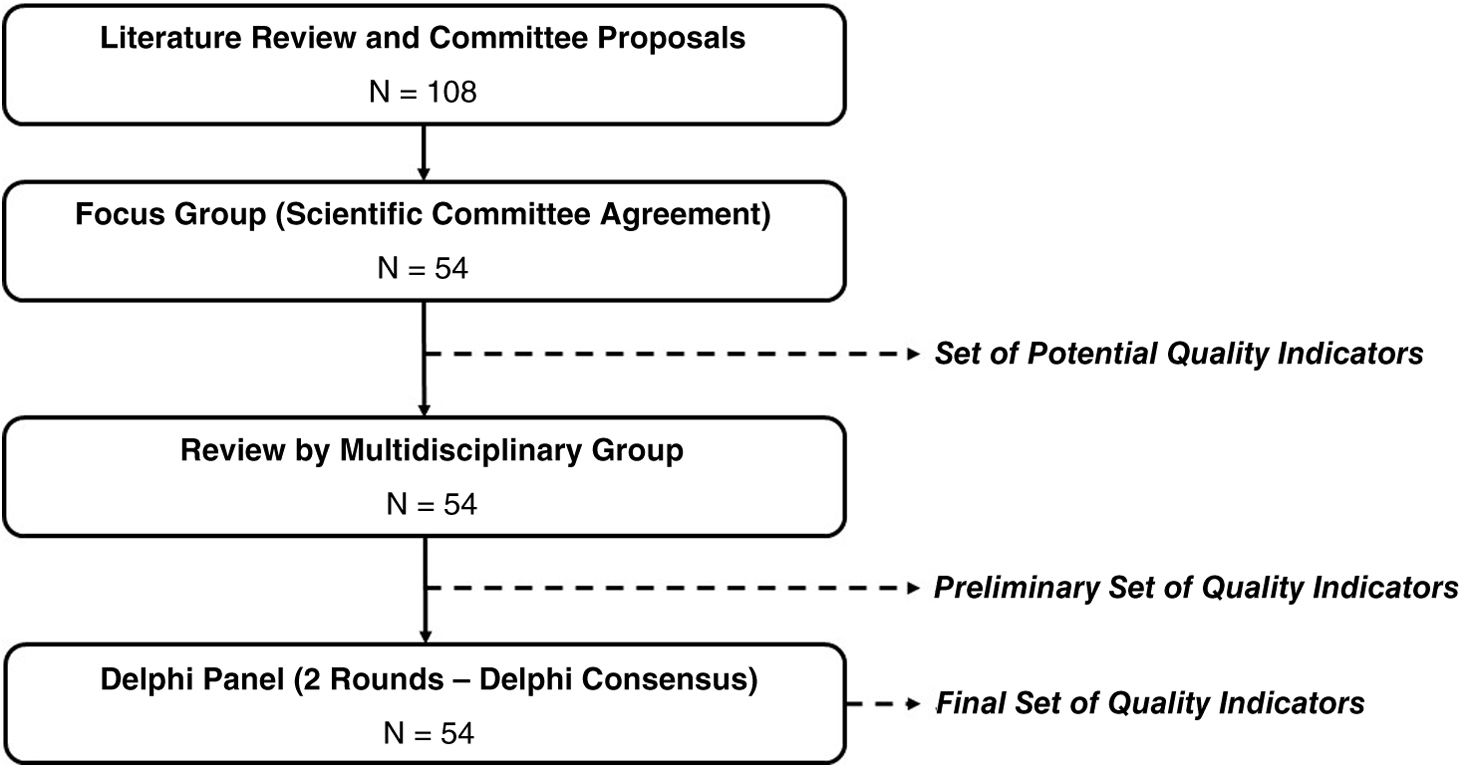
ResultsBased on the 22 references identified in the literature review,14–35 and following the proposal of quality indicators by the Scientific Committee, a list comprising 108 indicators was generated (Fig. 1).

Following the focus group, during which all previously proposed indicators were reviewed, consensus was reached on a set of 54 potential quality indicators. The multidisciplinary group reviewed this list and, although no indicators were added or excluded, modifications were made to their titles and descriptions. The resulting preliminary set of 54 indicators comprised 13 Structure indicators, 36 Process indicators, and 5 Outcome indicators (Table 1).
Quality indicators evaluated by the Delphi Panel.
| No. | Indicator | Definition |
|---|---|---|
| Structure indicators | ||
| Human resources and Unit staff | ||
| 1 | Dermatologist with experience in HS | The Unit has at least one dermatologist with experience in the management of patients with HS. |
| 2 | Nurse with experience in the care of patients with HS | The Unit has at least one nurse with experience in the management of patients with HS. |
| 3 | Surgical specialist with surgical experience in HS | The Unit has at least one dermatologist (or another physician) with experience in performing surgical procedures for the management of patients with HS. |
| Specific services provided by the Unit | ||
| 4 | Availability of facilities for dermatologist-led outpatient care | The Unit is integrated into a Dermatology Department with a physical space in which outpatient consultations can be conducted by the dermatologist specializing in HS. |
| 5 | Access to surgical facilities | The Unit is integrated into a Hospital or Dermatology Department with access to operating rooms or facilities where surgical procedures can be performed. This includes minor outpatient surgery as well as surgery under general anesthesia or sedation. |
| 6 | Access to a procedure room or treatment room for wound care or other procedures | The Unit is integrated into a Dermatology Department with a physical space (room or treatment area) where wound care or other procedures required by patients with HS can be performed. |
| 7 | Access to inpatient facilities | The Unit is integrated into a Dermatology Department with access to inpatient facilities to ensure continuity of care. |
| 8 | Access to a medical day hospital | The Unit is integrated into a Hospital or Dermatology Department with access to a medical day hospital to ensure continuity of care. |
| 9 | Availability of an independent outpatient nursing clinic with its own schedule | The Unit has an outpatient clinic or other resources that ensure that the nurse with experience in HS has an independent appointment schedule (not linked to the dermatologist's schedule) for patient care. |
| 10 | Access to telemedicine | The Unit has digital health telematic tools (telephone, Internet, mobile applications, etc.) for teledermatology initiatives. These tools are available for remote patient visits (televisits) and communication with other health care specialists through platforms designed for this purpose (teleconsultations). |
| 11 | Adequate infrastructure for clinical research | The Unit has access to a research or clinical trials unit with the physical infrastructure and personnel required for continuous participation in clinical trials or other scientific research studies. |
| Diagnostic techniques and methods available in the Unit | ||
| 12 | Access to skin ultrasound | The Unit has appropriate facilities and equipment for performing skin ultrasound. |
| 13 | Access to photodynamic therapy | The Unit has appropriate facilities and equipment for performing photodynamic therapy. |
| Process indicators | ||
| Recording of Unit activity | ||
| 14 | Recording the number of patients treated in the Unit | The Unit maintains an up-to-date record of the number of patients treated in the Unit without including their personal data. |
| Quality and organization of the Unit | ||
| 15 | Availability of information on Unit contact details | The Unit provides patients with contact information and/or has a communication channel to ensure continuity of care. |
| 16 | Referral system for outpatient Rheumatology consultations | The Unit has a system for referring patients with HS to outpatient consultations in the Rheumatology Department and from that Department back to the Unit. |
| 17 | Referral system for outpatient Gastroenterology consultations | The Unit has a system for referring patients with HS to outpatient consultations in the Gastroenterology Department and from that Department back to the Unit. |
| 18 | Referral system for outpatient Mental Health consultations | The Unit has a system for referring patients with HS to outpatient consultations in the Mental Health Department and from that Department back to the Unit. |
| 19 | Referral system for outpatient Endocrinology consultations | The Unit has a system for referring patients with HS to outpatient consultations in the Endocrinology Department and from that Department back to the Unit. |
| 20 | Referral system for outpatient Preventive Medicine and/or Infectious Diseases consultations | The Unit has a system for referring patients with HS to outpatient consultations in the Preventive Medicine and/or Infectious Diseases Department and from that Department back to the Unit. This referral includes the possibility of assessing the need for vaccination before systemic immunomodulatory treatment or screening for latent tuberculosis. |
| 21 | Referral system for outpatient Oncology consultations | The Unit has a system for referring patients with HS to outpatient consultations in the Oncology Department and from that Department back to the Unit. |
| 22 | Priority referral pathway between the Unit and Primary Care | The Unit has a priority pathway for referring patients with HS to Primary Care and from Primary Care back to the Unit. |
| 23 | Referral pathway between the Unit and the Emergency Department | The Unit has a system for referring patients with HS to the Emergency Department and from the Emergency Department back to the Unit. |
| 24 | Communication pathway with the Hospital Pharmacy Department | The Unit has an effective communication pathway with the Hospital Pharmacy Department to facilitate patient referral between the Department and the HS Unit and to enable consultations between the dermatologist and pharmacist whenever appropriate. |
| 25 | Priority access pathway to the Unit for patients requiring urgent care | The Unit has a priority pathway for referring patients from Primary Care, the Emergency Department, or other related specialty Units. |
| 26 | Time to access a dermatology consultation specializing in HS | The mean waiting time for a first visit to the HS Unit is 8 weeks or less. |
| Unit protocols and clinical guidelines | ||
| 27 | Specific protocol for the HS diagnostic visit | The Unit has its own evidence-based, up-to-date protocol tailored to each patient and/or follows national and/or international clinical practice guideline recommendations for the correct diagnosis of HS. The protocol includes medical history taking, skin examination, assessment of the patient's overall health status (objective and subjective assessment measures [PROs]), complementary tests adapted to each case, recording of patient history, comorbidities, previous treatments, etc. |
| 28 | Specific protocol for HS follow-up visits | The HS Unit has a standardized protocol specifying the aspects to be assessed at each follow-up visit and the frequency of these visits. |
| 29 | Protocol for management of HS comorbidities | The Unit has its own evidence-based, up-to-date protocol tailored to each patient and/or follows national and/or international clinical practice recommendations for managing comorbidities in patients with HS. |
| 30 | Specific protocol for pediatric patients with HS | The Unit has its own evidence-based, up-to-date protocol tailored to each patient and/or follows national and/or international clinical practice recommendations for managing HS in pediatric patients. |
| 31 | Specific protocol for pregnant women with HS | The Unit has its own evidence-based, up-to-date protocol tailored to each patient and/or follows national and/or international clinical practice recommendations for managing HS in pregnant patients. |
| 32 | Specific protocol for patients with HS and cancer | The Unit has its own evidence-based, up-to-date protocol tailored to each patient and/or follows national and/or international clinical practice recommendations for managing HS in patients with cancer. |
| 33 | Protocol for wound care and management of surgical wounds | The Unit has its own evidence-based, up-to-date protocol tailored to each patient and/or follows national and/or international clinical practice recommendations for wound care and management of surgical wounds in patients with HS. |
| 34 | Protocol for monitoring the safety of systemic HS treatments | The Unit has its own evidence-based, up-to-date protocol tailored to each patient and/or follows national and/or international clinical practice recommendations for the management of patients prescribed systemic treatment. This protocol includes assessment of safety parameters (e.g., infection screening) before treatment initiation and periodically thereafter, as well as a surveillance protocol or program for preventing, detecting, and promptly treating therapy-related adverse events. |
| 35 | Postoperative management protocol for HS | The Unit has its own evidence-based, up-to-date protocol tailored to each patient and/or follows national and/or international clinical practice recommendations for follow-up of patients with HS after surgery. This includes management of infections, complications, and surgical wounds in patients with HS. |
| Quality and organization of Unit staff | ||
| 36 | Regular multidisciplinary meetings | The Unit holds regular multidisciplinary meetings involving professionals from different specialties. The format (in person, videoconference, etc.) and the health care professionals attending these meetings should be agreed upon by the specialties involved according to patient needs. |
| 37 | Continuing education of health care professionals affiliated with the Unit | The Unit ensures that its health care staff receive up-to-date training through regular sessions, courses, or other educational initiatives. |
| 38 | Identification of specialist(s) assigned to each patient | The Unit assigns at least one identifiable HS specialist responsible for the care of each patient. |
| Patient follow-up – Monitoring of clinical progress | ||
| 39 | Baseline and periodic assessment of objective outcome measures | The Unit performs measurements at the first clinical visit and periodically thereafter to monitor changes in objective assessment measures in patients with HS under follow-up. These objective measures include those accepted nationally and/or internationally, preferably those included in the national HS registry. |
| 40 | Baseline and periodic assessment of subjective measures (PROs) | The Unit performs measurements at the first clinical visit and periodically thereafter to monitor changes in subjective assessment measures (PROs) in patients with HS under follow-up. These subjective measures include at least administration of a pain VAS and a quality-of-life questionnaire validated in dermatology (DLQI or another appropriately justified instrument) or specifically for HS (HiSQoL or another appropriately justified instrument). |
| 41 | Initial and periodic assessment of HS severity using ultrasound | The Unit performs ultrasound assessments at the first clinical visit and periodically thereafter to assess HS severity. |
| Patient follow-up – Measures to promote healthy lifestyle habits | ||
| 42 | Patient education regarding a healthy lifestyle | The Unit promotes healthy lifestyle habits among patients with HS. |
| Patient follow-up – Assessment of patient-reported outcomes and experience (PRO/PRE) | ||
| 43 | Assessment of patient satisfaction with healthcare | The Unit annually assesses satisfaction with the health care received by patients followed by the Unit. |
| 44 | Assessment of treatment adherence | The Unit periodically evaluates treatment adherence among patients with HS. This assessment should be performed by the dermatologist, nurse, and/or hospital pharmacist. |
| Active communication with patients | ||
| 45 | Patient health education and availability of written or audiovisual educational materials | The Unit includes patient health education among its management objectives in order to improve patients’ knowledge of their condition. The Unit therefore makes educational material available to patients who request it in the format best suited to their needs (digital material, infographics, scientific articles, etc.). |
| 46 | Shared decision-making and joint establishment of treatment goals with the patient | The Unit makes therapeutic decisions and establishes treatment goals through a shared process with the patient. This process must be documented in the medical record. |
| 47 | Specialist engagement with patients | The Unit informs patients about the existence of patient associations and, when patients are interested, provides their contact details. It also collaborates in other initiatives such as workshops, patient schools, or the preparation of informational leaflets. |
| Unit contribution to scientific research | ||
| 48 | Participation in research projects or clinical trials | The Unit conducts or participates in scientific research projects, including clinical trials or other biomedical scientific research projects (e.g., observational studies), and participates in and promotes scientific publications on HS. Participation in research projects means that a member of the Unit acts as Principal Investigator or collaborates in at least one project per year. |
| 49 | Participation in initiatives promoted by scientific societies | The Unit actively participates in activities promoted by scientific societies in the fields of dermatology and HS. |
| Outcome indicators | ||
| Clinical Unit performance variables | ||
| 50 | Patients treated in the Unit with adequate control of HS inflammation | The proportion of patients with HS treated in the Unit and followed for at least 1 year whose abscess and nodule (AN) count remains within or changes to a lower IHS4 category during treatment and follow-up by the Unit is >50%. |
| 51 | Patients treated in the Unit with adequate control of structural HS progression | The proportion of patients with HS treated in the Unit and followed for at least 1 year whose Hurley stage remains unchanged or decreases compared with their initial visit to the Unit is >60%. |
| Patient-perceived and patient-reported outcome variables (PRO) | ||
| 52 | Patients treated in the Unit with good quality of life [PROM] | The proportion of patients with HS treated in the Unit and followed for at least 1 year who achieve a score indicating improvement in quality of life, as measured using a quality-of-life questionnaire validated in dermatology (DLQI or another appropriately justified instrument) or specifically for HS (HiSQoL or another appropriately justified instrument), during the first year after initiation of the health care intervention is ≥30%. |
| 53 | Improvement in pain scores after initiation of a health care intervention for HS [PROM] | The proportion of patients with HS treated in the Unit and followed for at least 1 year who achieve a score indicating improvement in pain, as measured using the pain VAS during the first year after initiation of the health care intervention, is ≥30%. |
| Patient-perceived and patient-reported experience variables (PRE) | ||
| 54 | Patient satisfaction with care received in the HS Unit [PREM] | The proportion of patients with HS treated in the Unit and followed for at least 1 year who answer affirmatively to the PREM question administered at least annually (with the first question administered after 6 months of follow-up in the HS Unit), “Are you satisfied with how the care you have received in the Unit has evolved over the past year?”, is ≥50%. |
DLQI, Dermatology Life Quality Index; HiSQoL, Hidradenitis Suppurativa Quality of Life; HS, hidradenitis suppurativa; IHS4, International Hidradenitis Suppurativa Severity Score System; PRE, Patient-Reported Experience; PREM, Patient-Reported Experience Measure; PRO, Patient-Reported Outcome; PROM, Patient-Reported Outcome Measure; VAS, visual analog scale.
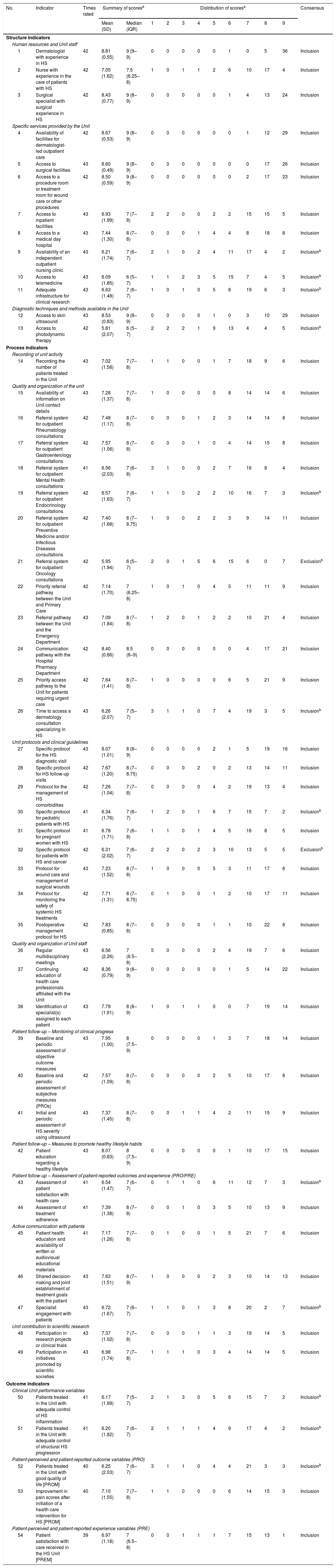
The preliminary set of indicators was presented to the Delphi panel. In the first round, 44 panelists who were members of the GEHS participated, 43 of whom also submitted responses in the second round. The ratings observed in the second round, together with the consensus reached regarding the inclusion or exclusion of each indicator, are presented in Table 2.
Delphi Panel results (second round).
| No. | Indicator | Times rated | Summary of scoresa | Distribution of scoresa | Consensus | |||||||||
|---|---|---|---|---|---|---|---|---|---|---|---|---|---|---|
| Mean (SD) | Median (IQR) | 1 | 2 | 3 | 4 | 5 | 6 | 7 | 8 | 9 | ||||
| Structure indicators | ||||||||||||||
| Human resources and Unit staff | ||||||||||||||
| 1 | Dermatologist with experience in HS | 42 | 8.81 (0.55) | 9 (9–9) | 0 | 0 | 0 | 0 | 0 | 1 | 0 | 5 | 36 | Inclusion |
| 2 | Nurse with experience in the care of patients with HS | 42 | 7.05 (1.62) | 7.5 (6.25–8) | 1 | 0 | 1 | 1 | 2 | 6 | 10 | 17 | 4 | Inclusion |
| 3 | Surgical specialist with surgical experience in HS | 42 | 8.43 (0.77) | 9 (8–9) | 0 | 0 | 0 | 0 | 0 | 1 | 4 | 13 | 24 | Inclusion |
| Specific services provided by the Unit | ||||||||||||||
| 4 | Availability of facilities for dermatologist-led outpatient care | 42 | 8.67 (0.53) | 9 (8–9) | 0 | 0 | 0 | 0 | 0 | 0 | 1 | 12 | 29 | Inclusion |
| 5 | Access to surgical facilities | 43 | 8.60 (0.49) | 9 (8–9) | 0 | 0 | 0 | 0 | 0 | 0 | 0 | 17 | 26 | Inclusion |
| 6 | Access to a procedure room or treatment room for wound care or other procedures | 42 | 8.50 (0.59) | 9 (8–9) | 0 | 0 | 0 | 0 | 0 | 0 | 2 | 17 | 23 | Inclusion |
| 7 | Access to inpatient facilities | 43 | 6.93 (1.99) | 7 (7–8) | 2 | 2 | 0 | 0 | 2 | 2 | 15 | 15 | 5 | Inclusion |
| 8 | Access to a medical day hospital | 43 | 7.44 (1.30) | 8 (7–8) | 0 | 0 | 0 | 1 | 4 | 4 | 8 | 18 | 8 | Inclusion |
| 9 | Availability of an independent outpatient nursing clinic | 43 | 6.21 (1.74) | 7 (6–7) | 2 | 1 | 0 | 2 | 4 | 11 | 17 | 4 | 2 | Inclusionb |
| 10 | Access to telemedicine | 43 | 6.09 (1.85) | 6 (5–7) | 1 | 1 | 2 | 3 | 5 | 15 | 7 | 4 | 5 | Inclusionb |
| 11 | Adequate infrastructure for clinical research | 43 | 6.63 (1.48) | 7 (6–7) | 1 | 0 | 1 | 0 | 5 | 8 | 19 | 6 | 3 | Inclusionb |
| Diagnostic techniques and methods available in the Unit | ||||||||||||||
| 12 | Access to skin ultrasound | 43 | 8.53 (0.83) | 9 (8–9) | 0 | 0 | 0 | 0 | 1 | 0 | 3 | 10 | 29 | Inclusion |
| 13 | Access to photodynamic therapy | 42 | 5.81 (2.07) | 6 (5–7) | 2 | 2 | 2 | 1 | 9 | 13 | 4 | 4 | 5 | Inclusionb |
| Process indicators | ||||||||||||||
| Recording of unit activity | ||||||||||||||
| 14 | Recording the number of patients treated in the Unit | 43 | 7.02 (1.58) | 7 (7–8) | 1 | 1 | 0 | 0 | 1 | 7 | 18 | 9 | 6 | Inclusion |
| Quality and organization of the unit | ||||||||||||||
| 15 | Availability of information on Unit contact details | 43 | 7.28 (1.37) | 7 (7–8) | 1 | 0 | 0 | 0 | 0 | 8 | 14 | 14 | 6 | Inclusion |
| 16 | Referral system for outpatient Rheumatology consultations | 42 | 7.48 (1.17) | 8 (7–8) | 0 | 0 | 0 | 1 | 2 | 3 | 14 | 14 | 8 | Inclusion |
| 17 | Referral system for outpatient Gastroenterology consultations | 42 | 7.57 (1.06) | 8 (7–8) | 0 | 0 | 0 | 1 | 0 | 4 | 14 | 15 | 8 | Inclusion |
| 18 | Referral system for outpatient Mental Health consultations | 41 | 6.56 (2.03) | 7 (6–8) | 3 | 1 | 0 | 0 | 2 | 7 | 16 | 8 | 4 | Inclusion |
| 19 | Referral system for outpatient Endocrinology consultations | 42 | 6.57 (1.63) | 7 (6–7) | 1 | 1 | 0 | 2 | 2 | 10 | 16 | 7 | 3 | Inclusionb |
| 20 | Referral system for outpatient Preventive Medicine and/or Infectious Diseases consultations | 42 | 7.40 (1.68) | 8 (7–8.75) | 1 | 0 | 0 | 2 | 2 | 3 | 9 | 14 | 11 | Inclusion |
| 21 | Referral system for outpatient Oncology consultations | 42 | 5.95 (1.94) | 6 (5–7) | 2 | 0 | 1 | 5 | 6 | 15 | 6 | 0 | 7 | Exclusionb |
| 22 | Priority referral pathway between the Unit and Primary Care | 42 | 7.14 (1.70) | 7 (6.25–8) | 1 | 0 | 1 | 0 | 4 | 5 | 11 | 11 | 9 | Inclusion |
| 23 | Referral pathway between the Unit and the Emergency Department | 43 | 7.09 (1.84) | 8 (7–8) | 1 | 2 | 0 | 1 | 2 | 2 | 10 | 21 | 4 | Inclusion |
| 24 | Communication pathway with the Hospital Pharmacy Department | 42 | 8.40 (0.66) | 8.5 (8–9) | 0 | 0 | 0 | 0 | 0 | 0 | 4 | 17 | 21 | Inclusion |
| 25 | Priority access pathway to the Unit for patients requiring urgent care | 42 | 7.64 (1.41) | 8 (7–8) | 1 | 0 | 0 | 0 | 0 | 6 | 5 | 21 | 9 | Inclusion |
| 26 | Time to access a dermatology consultation specializing in HS | 43 | 6.26 (2.07) | 7 (5–7) | 3 | 1 | 1 | 0 | 7 | 4 | 19 | 3 | 5 | Inclusionb |
| Unit protocols and clinical guidelines | ||||||||||||||
| 27 | Specific protocol for the HS diagnostic visit | 43 | 8.07 (1.01) | 8 (8–9) | 0 | 0 | 0 | 0 | 2 | 1 | 5 | 19 | 16 | Inclusion |
| 28 | Specific protocol for HS follow-up visits | 42 | 7.67 (1.20) | 8 (7–8.75) | 0 | 0 | 0 | 2 | 0 | 2 | 13 | 14 | 11 | Inclusion |
| 29 | Protocol for the management of HS comorbidities | 42 | 7.26 (1.04) | 7 (7–8) | 0 | 0 | 0 | 0 | 4 | 2 | 19 | 13 | 4 | Inclusion |
| 30 | Specific protocol for pediatric patients with HS | 41 | 6.34 (1.76) | 7 (6–7) | 1 | 2 | 0 | 1 | 6 | 7 | 15 | 7 | 2 | Inclusionb |
| 31 | Specific protocol for pregnant women with HS | 41 | 6.78 (1.71) | 7 (6–8) | 1 | 1 | 0 | 1 | 4 | 5 | 16 | 8 | 5 | Inclusion |
| 32 | Specific protocol for patients with HS and cancer | 42 | 6.31 (2.02) | 7 (6–7) | 2 | 2 | 0 | 2 | 3 | 10 | 13 | 5 | 5 | Exclusionb |
| 33 | Protocol for wound care and management of surgical wounds | 43 | 7.23 (1.52) | 8 (7–8) | 1 | 0 | 0 | 0 | 5 | 3 | 11 | 17 | 6 | Inclusion |
| 34 | Protocol for monitoring the safety of systemic HS treatments | 42 | 7.71 (1.31) | 8 (7–8.75) | 0 | 1 | 0 | 0 | 1 | 2 | 10 | 17 | 11 | Inclusion |
| 35 | Postoperative management protocol for HS | 42 | 7.83 (0.85) | 8 (7–8) | 0 | 0 | 0 | 0 | 1 | 1 | 10 | 22 | 8 | Inclusion |
| Quality and organization of Unit staff | ||||||||||||||
| 36 | Regular multidisciplinary meetings | 43 | 6.56 (2.26) | 7 (6.5–8) | 5 | 0 | 0 | 0 | 2 | 4 | 19 | 7 | 6 | Inclusion |
| 37 | Continuing education of health care professionals affiliated with the Unit | 42 | 8.36 (0.79) | 9 (8–9) | 0 | 0 | 0 | 0 | 0 | 1 | 5 | 14 | 22 | Inclusion |
| 38 | Identification of specialist(s) assigned to each patient | 43 | 7.79 (1.61) | 8 (8–9) | 1 | 0 | 1 | 1 | 0 | 0 | 7 | 19 | 14 | Inclusion |
| Patient follow-up – Monitoring of clinical progress | ||||||||||||||
| 39 | Baseline and periodic assessment of objective outcome measures | 43 | 7.95 (1.00) | 8 (7.5–9) | 0 | 0 | 0 | 0 | 1 | 3 | 7 | 18 | 14 | Inclusion |
| 40 | Baseline and periodic assessment of subjective measures (PROs) | 42 | 7.57 (1.09) | 8 (7–8) | 0 | 0 | 0 | 0 | 2 | 5 | 10 | 17 | 8 | Inclusion |
| 41 | Initial and periodic assessment of HS severity using ultrasound | 43 | 7.37 (1.45) | 8 (7–8) | 0 | 0 | 1 | 1 | 4 | 2 | 11 | 15 | 9 | Inclusion |
| Patient follow-up – Measures to promote healthy lifestyle habits | ||||||||||||||
| 42 | Patient education regarding a healthy lifestyle | 43 | 8.07 (0.83) | 8 (7.5–9) | 0 | 0 | 0 | 0 | 0 | 1 | 10 | 17 | 15 | Inclusion |
| Patient follow-up – Assessment of patient-reported outcomes and experience (PRO/PRE) | ||||||||||||||
| 43 | Assessment of patient satisfaction with health care | 41 | 6.54 (1.47) | 7 (6–7) | 0 | 1 | 1 | 0 | 6 | 11 | 12 | 7 | 3 | Inclusionb |
| 44 | Assessment of treatment adherence | 41 | 7.39 (1.38) | 8 (7–8) | 0 | 0 | 1 | 0 | 3 | 5 | 10 | 13 | 9 | Inclusion |
| Active communication with patients | ||||||||||||||
| 45 | Patient health education and availability of written or audiovisual educational materials | 41 | 7.17 (1.26) | 7 (7–8) | 0 | 1 | 0 | 0 | 1 | 5 | 21 | 7 | 6 | Inclusion |
| 46 | Shared decision-making and joint establishment of treatment goals with the patient | 43 | 7.63 (1.51) | 8 (7–9) | 1 | 0 | 0 | 0 | 2 | 3 | 10 | 14 | 13 | Inclusion |
| 47 | Specialist engagement with patients | 43 | 6.72 (1.67) | 7 (6–7) | 1 | 1 | 0 | 1 | 3 | 8 | 20 | 2 | 7 | Inclusionb |
| Unit contribution to scientific research | ||||||||||||||
| 48 | Participation in research projects or clinical trials | 43 | 7.37 (1.02) | 7 (7–8) | 0 | 0 | 0 | 1 | 1 | 3 | 19 | 14 | 5 | Inclusion |
| 49 | Participation in initiatives promoted by scientific societies | 43 | 6.98 (1.74) | 7 (7–8) | 1 | 1 | 1 | 0 | 3 | 4 | 14 | 14 | 5 | Inclusion |
| Outcome indicators | ||||||||||||||
| Clinical Unit performance variables | ||||||||||||||
| 50 | Patients treated in the Unit with adequate control of HS inflammation | 41 | 6.17 (1.99) | 7 (5–7) | 2 | 1 | 3 | 0 | 5 | 6 | 15 | 7 | 2 | Inclusionb |
| 51 | Patients treated in the Unit with adequate control of structural HS progression | 41 | 6.20 (1.82) | 7 (6–7) | 2 | 1 | 1 | 1 | 4 | 9 | 17 | 4 | 2 | Inclusionb |
| Patient-perceived and patient-reported outcome variables (PRO) | ||||||||||||||
| 52 | Patients treated in the Unit with good quality of life [PROM] | 40 | 6.25 (2.03) | 7 (6–7) | 3 | 1 | 1 | 0 | 4 | 4 | 21 | 3 | 3 | Inclusionb |
| 53 | Improvement in pain scores after initiation of a health care intervention for HS [PROM] | 40 | 7.10 (1.55) | 7 (7–8) | 1 | 1 | 0 | 0 | 0 | 6 | 14 | 15 | 3 | Inclusion |
| Patient-perceived and patient-reported experience variables (PRE) | ||||||||||||||
| 54 | Patient satisfaction with care received in the HS Unit [PREM] | 39 | 6.97 (1.18) | 7 (6.5–8) | 0 | 0 | 1 | 1 | 1 | 7 | 15 | 13 | 1 | Inclusion |
SD, standard deviation; HS, hidradenitis suppurativa; IQR, interquartile range; PRE, Patient-Reported Experience; PREM, Patient-Reported Experience Measure; PRO, Patient-Reported Outcome; PROM, Patient-Reported Outcome Measure.
The resulting definitive set of quality indicators included 52 indicators: 13 Structure indicators, 34 Process indicators, and 5 Outcome indicators.
DiscussionCertification of units using quality indicators is an increasingly widespread strategy for standardizing clinical practice because it also provides assurance regarding quality of care and encourages the incorporation of up-to-date equipment, protocols, and treatments.10,11,40–42 In this regard, the AEDV CUDERMA project represents one of the largest initiatives in Spain aimed at standardizing medical care.10,11 This study specifically expands the scope of the CUDERMA initiative to HS units, as it had previously focused exclusively on psoriasis10 and dermato-oncology.11 Furthermore, certification of HS units, together with other AEDV strategic initiatives such as the REHS,7 provides an encouraging outlook for people living with this disease.
Unlike the projects conducted in psoriasis10 and dermato-oncology,11 this HS-focused consensus presents several methodological and implementation differences. First, the initial proposal of potentially relevant indicators was developed primarily through a focus group, in contrast to the extraction of indicators from the scientific literature used in former CUDERMA projects.10,11 Given the limited literature available in this field, qualitative research based on a focus group involving the Scientific Committee was considered the most informative method.
The most notable change was the elimination of the categorization of indicators as “Basic” (essential aspects for the operation of dermatology units) or “Excellence” indicators (aspects that provide added value to the unit but whose absence does not determine whether it functions correctly).10,11 These categories were reconsidered based on the experience of the psoriasis and dermato-oncology working groups, which reported certain difficulties in developing the certification standard from the consensus reached by their respective Delphi panels.10,11 Therefore, the working group responsible for developing the HS standard proposes reconsidering certification of units as “Basic” or “Excellence” according to the percentage of indicators fulfilled during the audit. In any event, defining the certification method will take place during more advanced phases of the project.
Irrespective of these differences, the Delphi consensus regarding the 52 aspects to be measured by quality indicators was robust. In summary, the aspects that should be included in the certification standard for HS units were: (1) a team of health care professionals with experience in the management of HS, led by a dermatologist and working in close multidisciplinary collaboration (including a system of care pathways enabling referral of patients to other medical specialties); (2) optimal facilities for the outpatient management of patients with HS, with the possibility of surgery and hospital admission, appropriately equipped in both settings; (3) operation and clinical practice based on up-to-date approaches supported by the scientific literature; (4) comprehensive monitoring of conventional clinical variables, patient-reported outcomes (PROs, Patient-Reported Outcomes), and patient-reported experience (PRE, Patient-Reported Experience) relevant to HS; (5) person-centered health care and treatment, including shared decision-making, health education, contact with patient associations, and monitoring of patient satisfaction; and (6) commitment to scientific research in the field of HS.
Although numerous scientific consensus statements on HS have been published, mainly focusing on the diagnosis and treatment of the disease,17,43–47 these are directed toward clinical practice and do not address the holistic care process characteristic of units treating patients with HS. In contrast, a recent initiative aimed to establish health care standards for centers treating patients with HS.48 A Delphi panel comprising health care professionals from countries across all five continents, together with patient representatives, agreed on a set of 23 criteria, 14 of which were considered essential or very important (appropriate infrastructure, health education, continuity of care, etc.).48
Unlike that study,48 the present study proposes aspects to be measured by quality indicators for certification of the units themselves that provide care for patients with HS. This not only represents an additional step toward standardizing the management of HS but also provides additional guarantees regarding quality of care for these patients.
Beyond the importance of representing a pioneering initiative in HS, this study has several noteworthy strengths. First, the Delphi panel comprised 44 members of the GETHS. In addition to being a group of highly qualified professionals with extensive experience in HS, the group demonstrated a high level of commitment to the project. This is evidenced by participation in the second Delphi round, in which 43 responses were received from the 44 panelists who had provided ratings in the previous round.
Another strength was the collaboration of a multidisciplinary group in the indicator-review process. Among the experts involved, patient representation provided first-hand insight into patients’ perspectives regarding the aspects that are genuinely important to people living with HS.
Finally, it is important to highlight the separation between reaching consensus on the aspects that indicators should initially assess and the subsequent standardization and normalization of those indicators at a later stage. This approach provides flexibility when designing the certification standard and ensures that it encompasses all important aspects requiring assessment. Accordingly, this Delphi consensus represents the first stage, in which the aspects to be assessed by the quality indicators are defined. The working group will subsequently standardize the indicators by establishing, for each one, its name, definition, standard, target level of compliance, evidence of compliance, and any necessary clarifications. Auditing and certification of units will be conducted using the standardized list; however, the aspects considered in this study may already serve as areas for improvement to optimize the performance of HS units.
ConclusionsUsing Delphi methodology, this study achieved scientific consensus on a series of aspects to be measured by future quality indicators for the certification of HS units. The set comprised 13 Structure indicators, 34 Process indicators, and 5 Outcome indicators, which will be standardized during subsequent phases of the CUDERMA project with the ultimate goal of certifying these units.
- •
A Delphi consensus process was conducted for the certification of Dermatology Units providing care for patients with hidradenitis suppurativa (HS), involving 43 members of the Spanish Hidradenitis Suppurativa Working Group (GEHS), who evaluated a list of 54 indicators endorsed by an interdisciplinary group comprising a patient with hidradenitis suppurativa, a specialist in family and community medicine, a specialist in general surgery, a specialist in endocrinology, and three nurses with experience in the management of HS.
- •
The process resulted in consensus on 52 quality indicators (13 Structure indicators, 34 Process indicators, and 5 Outcome indicators).
- •
The aspects agreed upon were: (1) a team of health care professionals with experience in the management of HS, led by a dermatologist and working in close multidisciplinary collaboration (including a system enabling referral of patients to other medical specialties); (2) optimal facilities for the outpatient management of patients with HS, with the possibility of hospital admission when required, both appropriately equipped; (3) operation and clinical practice based on up-to-date approaches supported by the scientific literature; (4) comprehensive monitoring of conventional clinical variables, patient-reported outcomes (PROs), and patient-reported experience (PRE) relevant to HS; (5) person-centered health care and treatment, including shared decision-making, health education, contact with patient associations, and monitoring of patient satisfaction; and (6) commitment to scientific research in the field of HS.
A. de la Cuadra-Grande – 0000-0002-2501-3049.
FundingThis project was promoted and funded by the Spanish Academy of Dermatology and Venereology (AEDV) through an unrestricted grant from UCB.
Conflicts of interestAM has received honoraria and/or travel grants and/or served as a member of advisory boards for Abbvie, Aceleryn, Almirall, Amgen, Boehringer Ingelheim, Bristol-Myers Squibb, Celgene, Incyte, Johnson&Johnson, Leo-Pharma, MoonLake, Novartis, Pfizer, Sandoz, Sanofi, UCB, and Legit Health. AM has also served as principal investigator in clinical trials sponsored by Abbvie, Aceleryn, Almirall, Amgen, Boehringer Ingelheim, Bristol-Myers Squibb, Celgene, Incyte, Johnson&Johnson, Leo-Pharma, MoonLake, Novartis, Pfizer, MSD, Takeda, Sanofi, UCB, AbbVie, and MSD.
FJGM declares having received honoraria for consultancy and/or participation as a speaker, and/or travel grants, and/or having participated in clinical trials or studies sponsored by AbbVie, Almirall, Leo-Pharma, Insmed, Celgene, Novartis, Cantabria Labs, Sanofi, Boehringer, Biofrontera, Pfizer, Astra-Zeneca, MSD, and UCB Pharma.
AML declares having received honoraria for consultancy and/or participation as a speaker, and/or travel grants, and/or having participated in clinical trials sponsored by AbbVie, Almirall, Celgene, Novartis, Sandoz, Sanofi, and UCB.
LSB has received research-support grants, served as a consultant, and/or received honoraria from Abbvie, Almirall, Amgen, Biogen, Boheringer, BMS, Celgene, Janssen-Cilag, Leo Pharma, Novartis, Pfizer, Sandoz, MSD-Schering-Plough, Lilly, and UCB.
FJMR has received honoraria and/or travel grants and/or served on advisory boards for Novartis, Abbvie, Janssen Cilag, UCB, Lilly, LEO Pharma, L’Oréal, Sanofi, Almirall, and Amgen.
ACG and MRP are employees of Pharmacoeconomics & Outcomes Research Iberia (PORIB), a consultancy specializing in the economic evaluation of health care interventions and health outcomes research, which received fees from the AEDV to provide methodological support throughout the project.
EV has received funding/honoraria for educational activities, consultancy, advisory services, or speaking engagements from Abbvie, Aceleryn, Almirall, Amgen, Bayer, Biofrontera, Boehringer Ingelheim, Bristol-Myers Squibb, Celgene, Galderma, Gebro, Incyte, Isdin, Johnson&Johnson, Leo-Pharma, Lilly, Merck-Serono, MoonLake, MSD, Novartis, Pfizer, Roche, Sandoz, Sanofi, and UCB. EV has also worked as a consultant, investigator, or collaborator for the following companies/start-ups: iDermApp, Mediktor, DermUS, Biomi, and Barcelona Health Hub. Secretary of the Spanish Hidradenitis Suppurativa Working Group.
All authors participated in the preparation of this manuscript and reviewed and validated its final version.
The authors wish to thank Miguel Ángel Casado, director of Pharmacoeconomics & Outcomes Research Iberia (PORIB), for his invaluable collaboration in carrying out this project.
† Multidisciplinary Group:
Del Barrio Gonzalo, Miriam (Patient); López Martín, Inmaculada (Primary Care, Medicine); Navarro, Francisco (Surgery); Nicolau, Joana (Endocrinology); Nieva García, Laura (Primary Care, Nursing); Segura Julvé, M. Rosa (Nursing); Solera Talamante, María (Nursing); and Urbano Alcaraz, María (Nursing).
‡ Consensus Group:
Alfageme Roldán, Fernando (Hospital Universitario Puerta de Hierro, Madrid); Bassas-Vila, Juli (Hospital Universitari Germans Trias i Pujol, Barcelona); Ciudad Blanco, Cristina (Hospital General Universitario Gregorio Marañon, Madrid); Corral-Magaña, Oriol (Hospital Universitari Mútua Terrassa, Barcelona); De la Cruz Gómez, Evelina Josefina (Hospital Universitario de Móstoles, Madrid); De la Fuente-Meira, Sonia (Hospital Clínico Universitario Lozano Blesa, Zaragoza); Escutia Muñoz, Begoña (–); Falkenhain López, Daniel (Hospital 12 de Octubre); Fernández-Díaz, María Luisa (Hospital Universitario Lucus Augusti, Lugo); Fernández-González, Pablo (Hospital Ramón y Cajal, Madrid); Fernández Quiroga, Carolina (Hospital Sant Joan Despí Moisés Broggi, Barcelona); Fernández-Crehuet, Pablo (Hospital Universitario Reina Sofia, Córdoba); Fonda-Pascual, Pablo (Hospital Central de la Defensa Gómez Ulla, Madrid); Fuertes de Vega, Irene (Hospital Clínic de Barcelona, Barcelona); Garbayo Salmons, Patricia (Hospital Universitari Parc Taulí, Barcelona); Garcias-Ladaria, Juan (Hospital Universitari Son Espases, Illes Balears); Gracia Darder, Inés (Hospital Universitari Son Espases, Illes Balears); Guimerá Martín-Neda, Francisco José (–); Iglesias Puzas, Álvaro (Hospital Vital Álvarez Buylla, Asturias); Imbernón Moya, Adrián (Hospital Universitario Severo Ochoa, Madrid); Mansilla-Polo, Miguel (Hospital Universitario y Politécnico La Fe, Valencia); Marrón, Servando E. (Hospital Universitario Miguel Servet, Zaragoza); Martín-Alcalde, Javier (Hospital Universitario Fundación Alcorcón, Madrid); Martín-Ezquerra, Gemma (Hospital del Mar, Barcelona); Masferrer, Emili (Hospital Universitari Mútua Terrassa, Barcelona); Mora-Fernández, Verónica (Hospital Universitari Germans Trias i Pujol, Barcelona); Muñiz de Lucas, Arantxa (Hospital Universitario de Torrejón, Madrid); Navarro Guillamón, Pedro J. (Hospital Universitario Virgen de la Victoria, Málaga); Navarro Vicente, Francisco (Hospital de Manises, Valencia); Oro-Ayude, Marcos (Complejo Hospitalario Universitario de Pontevedra, Pontevedra); Ortiz Álvarez, Juan (Hospital Público de Verín, Ourense); Pascual Ramírez, José Carlos (Hospital General Universitario Doctor Balmis, Alicante); Pericet Fernández, Laura M. (Hospital Universitario Príncipe de Asturias, Madrid); Rivera-Diaz, Raquel (Hospital Universitario 12 de Octubre, Madrid); Ruano del Salado, Marta (Hospital Universitario de Torrejón de Ardoz, Madrid); Sanz Correa, Juan (Hospital Universitario Príncipe de Asturias, Madrid); Silventes San Nicasio, Catiana (Hospital Infanta Leonor, Vallecas, Madrid); and Vasquez Chinchay, Fiorella (–).
On behalf of the Multidisciplinary Group and the Consensus Group.

recomendados