


Public hospital dermatology in Spain faces an increasingly complex environment characterized by health care pressure, the incorporation of therapeutic and technological innovation, structural limitations of the health care system, and regional inequalities in access to care. Against this background, the Spanish Academy of Dermatology and Venereology (AEDV) promoted the development of its 2025–2030 Strategic Plan.
MethodsThe plan was developed using a consultative and participatory approach based on a structured survey of dermatologists with clinical experience in the public health care system and representative roles within the AEDV. Based on the results, a SWOT analysis was conducted to define priority areas for action, strategic objectives, and associated actions. The actions were subsequently prioritized according to their relevance and feasibility using a second online questionnaire. Measures of central tendency and dispersion were calculated for each action, allowing a structured comparative classification according to predefined quantitative criteria.
ResultsThe strategic assessment identified relevant strengths, including a high level of professional specialization and research capacity, together with structural weaknesses, including health care overload and regional inequalities. The prioritization exercise enabled the actions to be classified into four categories, identifying initiatives with potential for immediate impact and others of a structural nature to be developed over the medium to long term.
ConclusionsThe 2025–2030 Strategic Plan is an implementation-oriented tool that provides a pragmatic roadmap for strengthening public hospital dermatology and the role of the AEDV within the public health care system. The plan also incorporates a preliminary monitoring framework based on outcome-oriented strategic indicators.
Dermatology in Spain faces an increasingly complex environment, marked by growing health care demand,1 the continuous incorporation of therapeutic and technological innovation,2,3 as well as changes in the professional expectations of younger generations, pressure on human resources,4 and regional inequalities in access to care.2 In this context, a strategic vision is needed to anticipate challenges, identify opportunities, and guide medium- and long-term decision-making.
For this purpose, the Academia Española de Dermatología y Venereología (AEDV) identified the need for a 2025–2030 Strategic Plan that would serve both to define the current situation and as a framework and roadmap for future management. The plan will enable the AEDV to support public-sector dermatology and consolidate its role as a reference institution, strengthening its structure, optimizing resources, and ensuring its sustainability. To date, there are no comprehensive strategic documents specifically addressing public hospital dermatology in Spain within a defined time horizon, which justifies the need for this initiative. The proposed actions seek not only to strengthen the specialty and its impact on the health care system, but also to increase the visibility of the AEDV and support its role as a coordinating body and promoter of quality in dermatology in both health care and scientific settings, reinforcing its positioning among professionals and society.
This article summarizes the main findings of the strategic assessment, describes the defined framework for action, and presents an exercise prioritizing the proposed actions according to their impact and feasibility, with the aim of facilitating their actual implementation.
MethodologyThe Strategic Plan was developed using a consultative and participatory approach based on the collection of qualitative and quantitative information through a structured survey of dermatologists with extensive clinical experience and territorial and thematic representativeness within the AEDV.
The questionnaire assessed internal and external variables affecting the specialty, considering both perceptions of the current situation and their potential impact by 2030. The responses enabled a SWOT analysis (strengths, weaknesses, opportunities, and threats), from which the critical variables influencing the future development of hospital dermatology were identified.
On this basis, priority areas for action, strategic objectives, and specific actions aligned with the identified needs were defined.
Finally, to guide implementation of the Strategic Plan, a specific prioritization exercise was conducted for the proposed actions using a second online questionnaire. Each action was assessed according to two criteria:
- •
Relevance, defined as the expected impact on quality of care, sustainability of the specialty, and positioning of hospital dermatology.
- •
Feasibility, considering the resources required, organizational complexity, and viability within the current health care system.
Both criteria were rated on a scale from 1 (not at all) to 4 (very much). The scores obtained were aggregated to calculate a mean relevance and feasibility value for each action, which served as the basis for comparative classification against the overall mean values for both parameters.
Results of the strategic analysis and action planParticipantsThe survey was completed by a panel of 23 hospital dermatologists with >10 years of experience, from the board of directors and regional sections, the AEDV public-sector area, and representatives of different generational groups working within the public health care system. The panel size was considered appropriate for a structured qualitative strategic exercise, prioritizing territorial representativeness and clinical experience over sample size. In the action-prioritization exercise, responses were obtained from 14 of the 23 participating dermatologists.
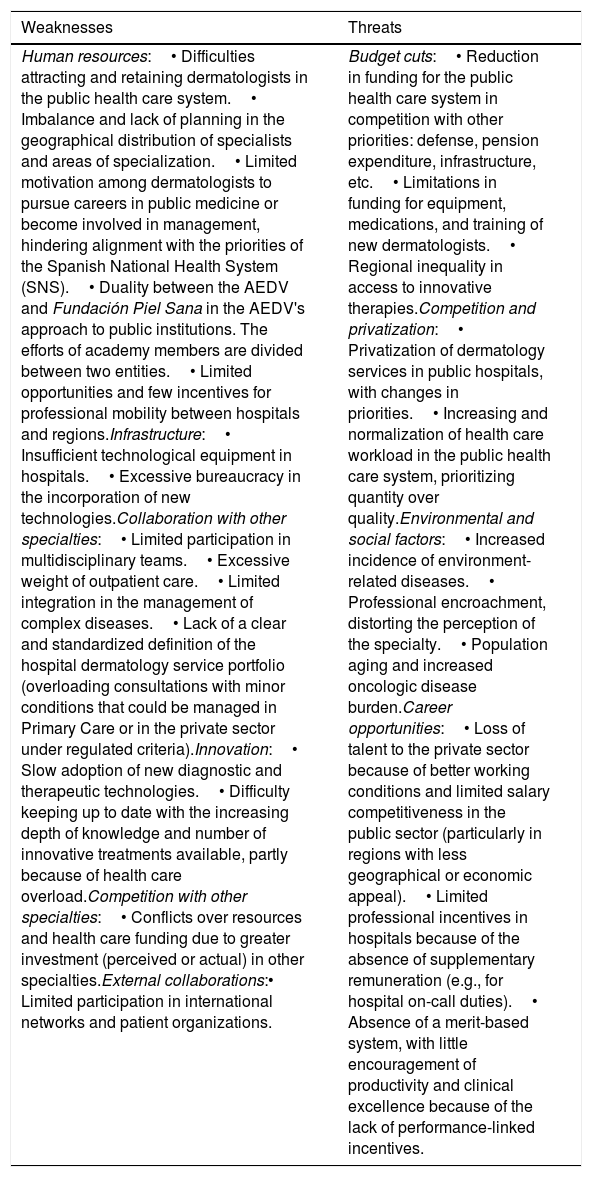
Strategic analysis: identification of critical variablesThe strategic analysis (Table 1) revealed a number of structural weaknesses, particularly difficulties in attracting and retaining dermatologists within the public system and their unequal territorial distribution, health care overload, limitations in technological infrastructure, and limited multidisciplinary integration in the management of complex patients. Relevant external threats were also identified, including budgetary constraints, increasing privatization, professional encroachment, and regional inequalities in access to innovative therapies.
Weaknesses, threats, strengths, and opportunities for Spanish public-sector dermatology identified during the strategic analysis.
| Weaknesses | Threats |
|---|---|
| Human resources:• Difficulties attracting and retaining dermatologists in the public health care system.• Imbalance and lack of planning in the geographical distribution of specialists and areas of specialization.• Limited motivation among dermatologists to pursue careers in public medicine or become involved in management, hindering alignment with the priorities of the Spanish National Health System (SNS).• Duality between the AEDV and Fundación Piel Sana in the AEDV's approach to public institutions. The efforts of academy members are divided between two entities.• Limited opportunities and few incentives for professional mobility between hospitals and regions.Infrastructure:• Insufficient technological equipment in hospitals.• Excessive bureaucracy in the incorporation of new technologies.Collaboration with other specialties:• Limited participation in multidisciplinary teams.• Excessive weight of outpatient care.• Limited integration in the management of complex diseases.• Lack of a clear and standardized definition of the hospital dermatology service portfolio (overloading consultations with minor conditions that could be managed in Primary Care or in the private sector under regulated criteria).Innovation:• Slow adoption of new diagnostic and therapeutic technologies.• Difficulty keeping up to date with the increasing depth of knowledge and number of innovative treatments available, partly because of health care overload.Competition with other specialties:• Conflicts over resources and health care funding due to greater investment (perceived or actual) in other specialties.External collaborations:• Limited participation in international networks and patient organizations. | Budget cuts:• Reduction in funding for the public health care system in competition with other priorities: defense, pension expenditure, infrastructure, etc.• Limitations in funding for equipment, medications, and training of new dermatologists.• Regional inequality in access to innovative therapies.Competition and privatization:• Privatization of dermatology services in public hospitals, with changes in priorities.• Increasing and normalization of health care workload in the public health care system, prioritizing quantity over quality.Environmental and social factors:• Increased incidence of environment-related diseases.• Professional encroachment, distorting the perception of the specialty.• Population aging and increased oncologic disease burden.Career opportunities:• Loss of talent to the private sector because of better working conditions and limited salary competitiveness in the public sector (particularly in regions with less geographical or economic appeal).• Limited professional incentives in hospitals because of the absence of supplementary remuneration (e.g., for hospital on-call duties).• Absence of a merit-based system, with little encouragement of productivity and clinical excellence because of the lack of performance-linked incentives. |
| Strengths | Opportunities |
|---|---|
| Human resources:• Experience and specialization of dermatologists and the high level of technical training of hospital dermatologists.• Leadership and management by department heads.Research and training:• Collaboration with specialized units and academic institutions.• Continuing education programs.• Well-structured training pathway provided by the AEDV.• Participation in clinical trials and research projects.Innovation:• Capacity to comprehensively manage complex diseases.• Research and investment in innovative therapies.Social trends and perception:• Education and awareness regarding the prevention and treatment of dermatological diseases.• Importance of perceptions of care in public hospitals.Technological advances:• Innovations in surgical techniques and development of new treatments.• Telemedicine and remote care.• Access to advanced therapies across a large number of indications.Demand for services:• Growing public interest in skin care to maintain healthy skin. | Technological advances:• Development and implementation of AI-based tools for dermatological diagnosis and treatment, as well as to optimize health care pathways, predict regional needs, and improve territorial equity.• Digitalization of the health care system as a lever to consolidate dermatology as a leading specialty in innovation (potential in medical imaging, diagnostic algorithms, and remote monitoring).Collaborations:• Partnerships with the pharmaceutical industry and international networks.• Participation with patient groups and multidisciplinary teams.• Opportunity to work jointly with health authorities to define new legislation for the benefit of society and professionals.• Existence of a single scientific society encompassing all of dermatology, allowing cross-cutting public–private actions to be proposed.Environmental and social factors:• Changes in environment-related epidemiological patterns.• Improvements in administrative policies supporting work-life balance.• Increase in neoplastic disease and the complexity of patients with inflammatory dermatological conditions, underscoring the need to give dermatology importance comparable to other specialties, such as oncology, to ensure access to tests and treatments.Social trends:• Increasing demand for aesthetic treatments and cosmetic procedures. |
In contrast, Spanish hospital dermatology has significant strengths, including the high level of specialization and training of professionals, the clinical and scientific leadership of many departments, participation in research and clinical trials, and the capacity to manage complex diseases. Opportunities associated with the development of digitalization, teledermatology, artificial intelligence, and increased social awareness of skin health were also identified.
Strategic framework and areas of actionBased on the assessment, eight strategic areas of action were defined to structure the 2025–2030 Strategic Plan:
- •
External collaborations
- •
Human resources and talent retention
- •
Innovation and technological advances
- •
Funding and resources
- •
Training and professional development
- •
Competition and privatization
- •
Environmental and social factors
- •
Demand for and perception of public-sector dermatology.
Each strategic area is conceived as an interdependent axis whose coordinated development is essential to maximize the overall impact of the plan.
Overall, 26 strategic objectives and 32 associated actions were established, designed with an operational and results-oriented approach to strengthen the positioning of hospital dermatology and the role of the AEDV as a leading scientific society.
The strategic objectives and proposed actions within each of the defined areas are detailed below.
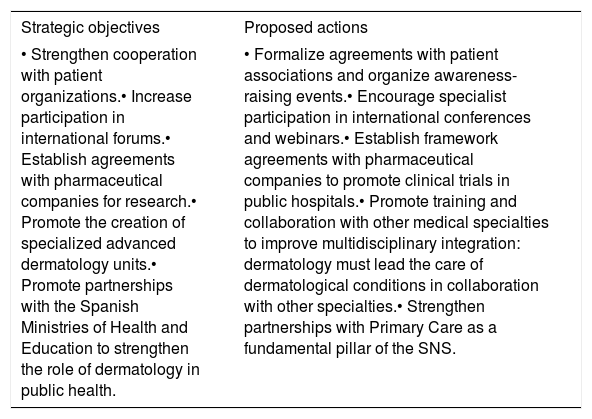
External collaborationsThe 2025–2030 Strategic Plan establishes strengthening external collaborations as a priority objective to enhance the role of hospital dermatology in health care, research, and public health. To this end, actions are proposed to strengthen cooperation with patient associations, increase participation in international forums and networks, promote agreements with the pharmaceutical industry for the development of clinical research in public hospitals, and encourage the creation of specialized advanced dermatology units. The plan also promotes institutional alliances and greater integration with other specialties and with Primary Care, fostering a multidisciplinary approach led by dermatology (Table 2).
Strategic objectives and proposed actions in the area of “External collaborations”.
| Strategic objectives | Proposed actions |
|---|---|
| • Strengthen cooperation with patient organizations.• Increase participation in international forums.• Establish agreements with pharmaceutical companies for research.• Promote the creation of specialized advanced dermatology units.• Promote partnerships with the Spanish Ministries of Health and Education to strengthen the role of dermatology in public health. | • Formalize agreements with patient associations and organize awareness-raising events.• Encourage specialist participation in international conferences and webinars.• Establish framework agreements with pharmaceutical companies to promote clinical trials in public hospitals.• Promote training and collaboration with other medical specialties to improve multidisciplinary integration: dermatology must lead the care of dermatological conditions in collaboration with other specialties.• Strengthen partnerships with Primary Care as a fundamental pillar of the SNS. |
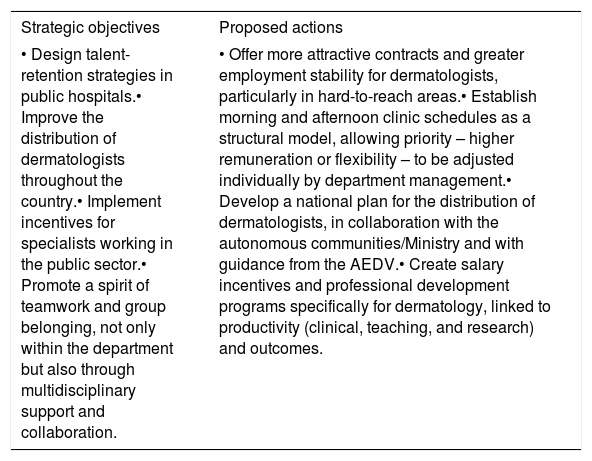
The AEDV Strategic Plan identified the need to strengthen public hospital dermatology through talent retention by improving the distribution of specialists and establishing incentives for remaining in the public sector. Proposed actions include offering more attractive and stable contracts, promoting flexible working hours and work-life balance, developing a national plan for the distribution of dermatologists according to health care needs, and creating salary incentives and professional development programs linked to healthcare, teaching, and research productivity, thereby consolidating the system's capacity to guarantee high-quality care and promote the professional growth of specialists. The development of specific indicators of retention and professional stability is also proposed to monitor the impact of the measures implemented (Table 3).
Strategic objectives and proposed actions in the area of “Human resources and talent retention”.
| Strategic objectives | Proposed actions |
|---|---|
| • Design talent-retention strategies in public hospitals.• Improve the distribution of dermatologists throughout the country.• Implement incentives for specialists working in the public sector.• Promote a spirit of teamwork and group belonging, not only within the department but also through multidisciplinary support and collaboration. | • Offer more attractive contracts and greater employment stability for dermatologists, particularly in hard-to-reach areas.• Establish morning and afternoon clinic schedules as a structural model, allowing priority – higher remuneration or flexibility – to be adjusted individually by department management.• Develop a national plan for the distribution of dermatologists, in collaboration with the autonomous communities/Ministry and with guidance from the AEDV.• Create salary incentives and professional development programs specifically for dermatology, linked to productivity (clinical, teaching, and research) and outcomes. |
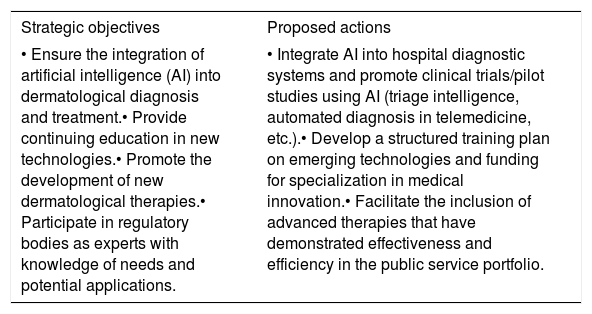
To promote innovation in dermatology, the AEDV Strategic Plan aims to expand the use of artificial intelligence (AI) in diagnosis and treatment, promote continuing education in new technologies, and foster knowledge and leadership in the indication of advanced therapies. Proposed actions include incorporating AI into diagnostic algorithms both in relation to Primary Care and routine procedures, conducting clinical trials and pilots of emerging technologies, offering specialized courses, and providing financial support for training in medical innovation. Other proposals include ensuring equitable incorporation of approved advanced therapies into the public service portfolio throughout the country, thereby strengthening the system's capacity to apply technological advances for the benefit of patients. The incorporation of these technologies should be based on criteria of clinical validation, interoperability with electronic health record systems, and compliance with data protection regulations (Table 4).
Strategic objectives and proposed actions in the area of “Innovation and technological advances”.
| Strategic objectives | Proposed actions |
|---|---|
| • Ensure the integration of artificial intelligence (AI) into dermatological diagnosis and treatment.• Provide continuing education in new technologies.• Promote the development of new dermatological therapies.• Participate in regulatory bodies as experts with knowledge of needs and potential applications. | • Integrate AI into hospital diagnostic systems and promote clinical trials/pilot studies using AI (triage intelligence, automated diagnosis in telemedicine, etc.).• Develop a structured training plan on emerging technologies and funding for specialization in medical innovation.• Facilitate the inclusion of advanced therapies that have demonstrated effectiveness and efficiency in the public service portfolio. |
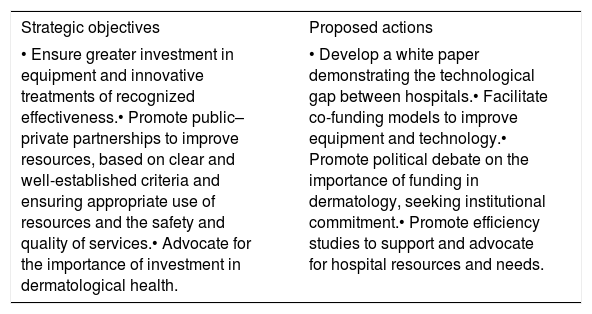
To strengthen resources and funding in dermatology, the AEDV Strategic Plan aims to guarantee greater investment in equipment and innovative treatments, promote public–private partnerships based on clear criteria, and foster recognition of the importance of investment in dermatological health together with the establishment of specific monitoring criteria. Proposed actions include generating evidence demonstrating the technological gap between hospitals, establishing co-funding models to improve equipment and technology, and promoting political debate highlighting the relevance and health return of funding in dermatology. It is considered a priority to accompany these initiatives with a preliminary economic impact analysis to estimate the health return and incremental efficiency resulting from investment in hospital dermatology (Table 5).
Strategic objectives and proposed actions in the area of “Funding and resources”.
| Strategic objectives | Proposed actions |
|---|---|
| • Ensure greater investment in equipment and innovative treatments of recognized effectiveness.• Promote public–private partnerships to improve resources, based on clear and well-established criteria and ensuring appropriate use of resources and the safety and quality of services.• Advocate for the importance of investment in dermatological health. | • Develop a white paper demonstrating the technological gap between hospitals.• Facilitate co-funding models to improve equipment and technology.• Promote political debate on the importance of funding in dermatology, seeking institutional commitment.• Promote efficiency studies to support and advocate for hospital resources and needs. |
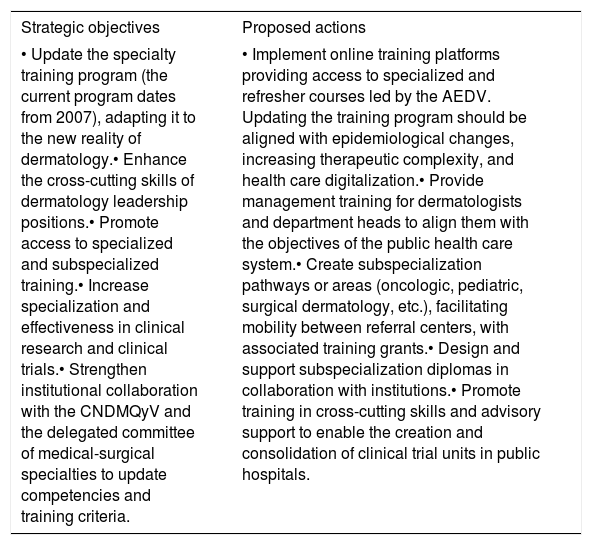
To consolidate training and professional development, the AEDV Strategic Plan seeks to ensure continuing education for dermatologists, update the specialty training program, promote access to specialized and highly specialized training, and increase participation in clinical trials. Proposed actions include offering management training to dermatologists and department heads to align their objectives with the public system, creating advanced subspecialization pathways and Advanced Accreditation Diplomas in areas such as oncologic, pediatric, or surgical dermatology. The plan proposes facilitating mobility between referral centers, awarding scholarships for subspecialty training, and promoting the creation of clinical trial units in public hospitals, thereby strengthening professional training and excellence in dermatology (Table 6).
Strategic objectives and proposed actions in the area of “Training and professional development”.
| Strategic objectives | Proposed actions |
|---|---|
| • Update the specialty training program (the current program dates from 2007), adapting it to the new reality of dermatology.• Enhance the cross-cutting skills of dermatology leadership positions.• Promote access to specialized and subspecialized training.• Increase specialization and effectiveness in clinical research and clinical trials.• Strengthen institutional collaboration with the CNDMQyV and the delegated committee of medical-surgical specialties to update competencies and training criteria. | • Implement online training platforms providing access to specialized and refresher courses led by the AEDV. Updating the training program should be aligned with epidemiological changes, increasing therapeutic complexity, and health care digitalization.• Provide management training for dermatologists and department heads to align them with the objectives of the public health care system.• Create subspecialization pathways or areas (oncologic, pediatric, surgical dermatology, etc.), facilitating mobility between referral centers, with associated training grants.• Design and support subspecialization diplomas in collaboration with institutions.• Promote training in cross-cutting skills and advisory support to enable the creation and consolidation of clinical trial units in public hospitals. |
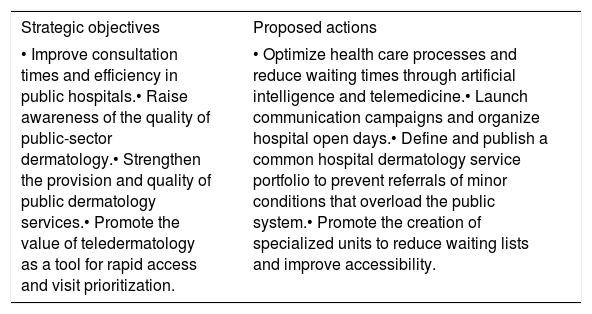
The AEDV Strategic Plan establishes strengthening the role of dermatology within the public health care system as a priority objective by improving efficiency and increasing the visibility of its value. Proposed actions include optimizing available resources through the introduction of health care processes supported by artificial intelligence and telemedicine, developing communication campaigns on the work of dermatologists, enhancing the clinical value of the specialty, defining a common service portfolio, and encouraging the creation of specialized units. The AEDV is also proposed to develop recommendations on standards for consultation times and patient experience. It is also necessary to develop comparative quality-of-care metrics to objectively demonstrate the differential value of public-sector dermatology compared with other models of health care provision (Table 7).
Strategic objectives and proposed actions in the area of “Competition and privatization”.
| Strategic objectives | Proposed actions |
|---|---|
| • Improve consultation times and efficiency in public hospitals.• Raise awareness of the quality of public-sector dermatology.• Strengthen the provision and quality of public dermatology services.• Promote the value of teledermatology as a tool for rapid access and visit prioritization. | • Optimize health care processes and reduce waiting times through artificial intelligence and telemedicine.• Launch communication campaigns and organize hospital open days.• Define and publish a common hospital dermatology service portfolio to prevent referrals of minor conditions that overload the public system.• Promote the creation of specialized units to reduce waiting lists and improve accessibility. |
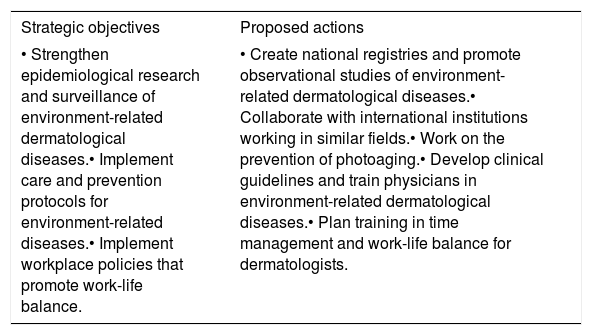
The priority objective in this area is to strengthen epidemiological and social research and surveillance of dermatological diseases linked to environmental factors, as well as to implement care and prevention protocols and promote labor policies that support work-life balance. Furthermore, this approach recognizes the role of dermatologists not only in adapting to environmental changes but also in the sustainability of the health care system through prevention, early diagnosis, and optimization of health care resources. This approach positions dermatology as a key specialty in adapting the health care system to the challenges arising from climate change and sociodemographic transformations.
To this end, actions are proposed to create national registries and promote observational studies on environment-related dermatological diseases, promote prevention of skin diseases associated with photoaging, develop clinical guidelines and specialized training in diseases related to the environment and sustainability, and plan training in time management and work-life balance for dermatologists, thereby consolidating a comprehensive dermatological response to environmental, social, and organizational challenges (Table 8).
Strategic objectives and proposed actions in the area of “Environmental and social factors”.
| Strategic objectives | Proposed actions |
|---|---|
| • Strengthen epidemiological research and surveillance of environment-related dermatological diseases.• Implement care and prevention protocols for environment-related diseases.• Implement workplace policies that promote work-life balance. | • Create national registries and promote observational studies of environment-related dermatological diseases.• Collaborate with international institutions working in similar fields.• Work on the prevention of photoaging.• Develop clinical guidelines and train physicians in environment-related dermatological diseases.• Plan training in time management and work-life balance for dermatologists. |
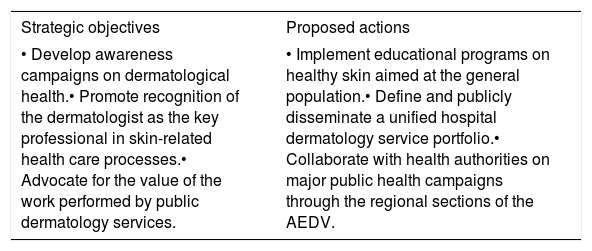
Finally, to strengthen the perception of and demand for public-sector dermatology, the plan proposes developing awareness campaigns on skin health, improving access to high-quality treatments in the public sector, and communicating the value of hospital dermatology services. Actions include implementing educational programs on healthy skin for the general population, defining and disseminating a hospital service portfolio to guide professionals and patients regarding the diseases that should be treated at this level, facilitating rapid-access protocols for high-cost treatments, and developing information campaigns highlighting the quality and excellence of public-sector dermatology (Table 9).
Strategic objectives and proposed actions in the area of “Demand for and perception of public-sector dermatology”.
| Strategic objectives | Proposed actions |
|---|---|
| • Develop awareness campaigns on dermatological health.• Promote recognition of the dermatologist as the key professional in skin-related health care processes.• Advocate for the value of the work performed by public dermatology services. | • Implement educational programs on healthy skin aimed at the general population.• Define and publicly disseminate a unified hospital dermatology service portfolio.• Collaborate with health authorities on major public health campaigns through the regional sections of the AEDV. |
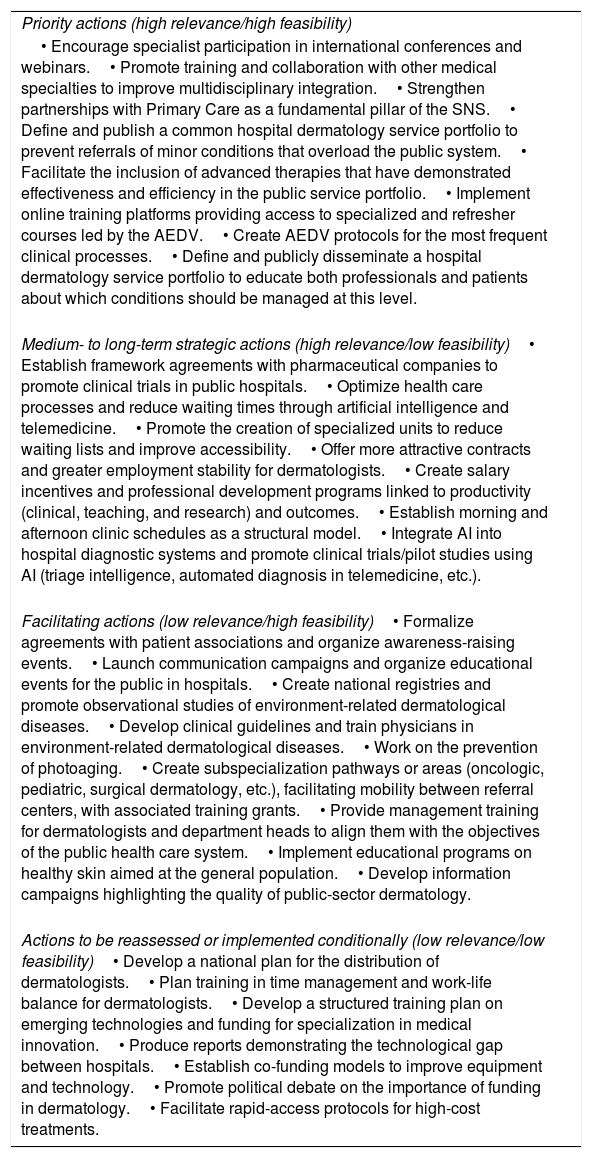
The prioritization analysis enabled the actions of the 2025–2030 Strategic Plan to be classified according to their strategic relevance and relative feasibility, using the overall mean values of both criteria as reference points (mean relevance: 3.21; mean feasibility: 2.73). Score dispersion was also analyzed to identify possible significant discrepancies among evaluators. Based on this comparison, the actions were grouped into four categories: priority actions (high relevance and high feasibility), medium- to long-term strategic actions (high relevance and low feasibility), support measures (low relevance and high feasibility), and actions to be reassessed or implemented conditionally (low relevance and low feasibility). This classification does not imply the definitive exclusion of any action, but rather strategic sequencing aimed at maximizing impact and viability at each stage (Table 10 and Supplementary Fig. 1).
Classification of the proposed actions according to degree of relevance and feasibility.
| Priority actions (high relevance/high feasibility) |
| • Encourage specialist participation in international conferences and webinars.• Promote training and collaboration with other medical specialties to improve multidisciplinary integration.• Strengthen partnerships with Primary Care as a fundamental pillar of the SNS.• Define and publish a common hospital dermatology service portfolio to prevent referrals of minor conditions that overload the public system.• Facilitate the inclusion of advanced therapies that have demonstrated effectiveness and efficiency in the public service portfolio.• Implement online training platforms providing access to specialized and refresher courses led by the AEDV.• Create AEDV protocols for the most frequent clinical processes.• Define and publicly disseminate a hospital dermatology service portfolio to educate both professionals and patients about which conditions should be managed at this level. |
| Medium- to long-term strategic actions (high relevance/low feasibility)• Establish framework agreements with pharmaceutical companies to promote clinical trials in public hospitals.• Optimize health care processes and reduce waiting times through artificial intelligence and telemedicine.• Promote the creation of specialized units to reduce waiting lists and improve accessibility.• Offer more attractive contracts and greater employment stability for dermatologists.• Create salary incentives and professional development programs linked to productivity (clinical, teaching, and research) and outcomes.• Establish morning and afternoon clinic schedules as a structural model.• Integrate AI into hospital diagnostic systems and promote clinical trials/pilot studies using AI (triage intelligence, automated diagnosis in telemedicine, etc.). |
| Facilitating actions (low relevance/high feasibility)• Formalize agreements with patient associations and organize awareness-raising events.• Launch communication campaigns and organize educational events for the public in hospitals.• Create national registries and promote observational studies of environment-related dermatological diseases.• Develop clinical guidelines and train physicians in environment-related dermatological diseases.• Work on the prevention of photoaging.• Create subspecialization pathways or areas (oncologic, pediatric, surgical dermatology, etc.), facilitating mobility between referral centers, with associated training grants.• Provide management training for dermatologists and department heads to align them with the objectives of the public health care system.• Implement educational programs on healthy skin aimed at the general population.• Develop information campaigns highlighting the quality of public-sector dermatology. |
| Actions to be reassessed or implemented conditionally (low relevance/low feasibility)• Develop a national plan for the distribution of dermatologists.• Plan training in time management and work-life balance for dermatologists.• Develop a structured training plan on emerging technologies and funding for specialization in medical innovation.• Produce reports demonstrating the technological gap between hospitals.• Establish co-funding models to improve equipment and technology.• Promote political debate on the importance of funding in dermatology.• Facilitate rapid-access protocols for high-cost treatments. |
This classification provides an operational interpretation of the plan by clearly identifying initiatives capable of generating short-term impact, as well as those that, because of their complexity or dependence on structural changes, should be addressed progressively or remain contingent on a more favorable context.
Priority actionsPriority actions, defined by high relevance and high feasibility, identify areas in which immediate impact can be generated. They are mainly aimed at improving the organization of dermatological care and its integration within the health care system through the definition and dissemination of a standardized service portfolio, strengthening collaboration with Primary Care and other specialties, and promoting clinical and management training, clinical protocols, and professional updating led by the AEDV. Their early implementation would optimize resource use, reduce health care overload, and improve quality of care in the short term.
Medium- to long-term strategic actionsMedium- to long-term strategic actions address high-impact structural challenges, such as actions aimed at facilitating talent retention, improving working conditions, developing specialized units, and incorporating advanced technologies, including artificial intelligence, whose implementation requires planning, additional resources, and organizational changes.
Facilitating actionsFacilitating actions are conceived as initiatives aimed at strengthening communication, awareness, and knowledge generation, helping to create the necessary conditions for effective deployment of the priority actions.
Actions to be reassessed or implemented conditionallyActions to be reassessed or implemented conditionally are identified as initiatives that, in the current context, present an unfavorable balance between impact and feasibility; their development is therefore contingent on regulatory, budgetary, or organizational changes that would allow them to be reconsidered in later phases of the plan.
Monitoring and updating of the Strategic PlanThe 2025–2030 Strategic Plan is conceived as a tool aimed at the progressive implementation of the identified actions within a health care environment subject to organizational, technological, and regulatory changes. In this regard, the prioritization exercise provides an operational framework that facilitates monitoring of the degree of development of the different initiatives, particularly those classified as priorities.
The classification of actions according to relevance and feasibility makes it possible to identify areas suitable for immediate implementation, as well as those whose development could be reconsidered according to changes in the context. This approach provides a structured basis that can be used by the AEDV to monitor progress of the plan and, where appropriate, guide future strategic updates without compromising its overall coherence. The preparation of an annual monitoring report is proposed to assess progress in priority actions and allow dynamic strategic adjustments.
DiscussionThe DEEP-DERM 2025–2030 Strategic Plan represents an AEDV response to the current challenges facing hospital dermatology in Spain, characterized by increasing health care pressure, rapid therapeutic and technological evolution, and structural limitations and inequalities in access within the public health care system.1–4 The plan is based on a structured participatory strategic assessment and the prioritization of actions according to relevance and feasibility, thereby strengthening its practical applicability.
The SWOT analysis identified persistent weaknesses, such as health care overload, regional inequalities, and limitations in human and technological resources, but also important strengths, including a high level of specialization, research capacity, and the potential to lead innovative models of care. Prioritization of the actions makes it possible to distinguish initiatives with immediate impact from those requiring structural changes or additional resources, providing a phased and realistic roadmap.
Priority actions focus on improving the organization of care, clarifying the common service portfolio and the standards required to fully develop the specialty, clearly defining and optimizing pathways with Primary Care and other specialties in order to lead processes involving skin disease, and enhancing training in clinical and cross-cutting skills and clinical protocols. Medium- to long-term strategic initiatives address challenges that require working with political and health care authorities to promote talent retention, improve working conditions, and incorporate advanced technologies. The classification of actions also facilitates monitoring and progressive updating of the plan, adapting it to changes in the health care environment. The incorporation of a structured system of indicators and a formal monitoring mechanism will be essential to translate strategic planning into tangible health care outcomes.
This strategic exercise has limitations inherent to its design, including the small size of the expert panel, the potential influence of perception bias, and the absence of direct participation by other key stakeholders such as health care managers or patient representatives. Nevertheless, the structured nature of the process and the participants’ experience lend robustness to the analysis.
Overall, the 2025–2030 Strategic Plan should not be interpreted as a closed document, but rather as a dynamic tool that can be updated and adapted according to developments in the health care system and the strategic priorities of the AEDV.
ConclusionsThe 2025–2030 Strategic Plan provides a clear and realistic roadmap for strengthening hospital dermatology in Spain. By combining a participatory assessment with prioritization of actions according to relevance and feasibility, it makes it possible to identify priority areas for intervention and guide decision-making progressively and sustainably.
Although the AEDV does not have direct capacity to implement many of the proposed measures, the plan is conceived as a tool to inspire, promote, and support initiatives aligned with its strategic objectives, facilitating dialogue among the different stakeholders involved and contributing to the continuous improvement of the specialty.
Specifically, although some actions were considered to have low feasibility after the procedure, the authors consider that the AEDV proposal should be ambitious in developing a national plan for the distribution of dermatologists, proposals for planning training in time management and work-life balance for dermatologists, and work on a structured training plan on emerging technologies and funding for specialization in medical innovation.
The success of the Strategic Plan will depend not only on the quality of its proposals, but also on the ability to generate institutional alliances and sustained commitment from the different stakeholders involved.
In this regard, the 2025–2030 Strategic Plan reinforces the role of the AEDV as a reference institution and a driving force for strategic reflection in the field of public-sector dermatology.
Authors’ contributionsAll listed authors meet the criteria for authorship, contributed substantially to the conception, development and/or critical review of the manuscript, approved the final version for submission, and agree to be accountable for all aspects of the work.
Ethical considerationsThis manuscript presents an institutional strategic project developed within the AEDV based on consultation with health care professionals. It does not involve interventions in patients and includes no identifiable patient data.
Declaration of generative AI and AI-assisted technologies in the writing processDuring the preparation of this work, the authors used Gemini to support drafting and language editing. After using this tool, the authors reviewed and edited the content as needed and take full responsibility for the content of the publication.
FundingNone declared.
Conflicts of interestNone declared.
The following are the supplementary data to this article: